The easiest way to lose or damage fine jewellery is rarely dramatic. It is usually a ring worn while lifting weights, a claw that has started catching on a jumper, a chain pulled from a knot, a pearl sprayed repeatedly with perfume, or an important piece left on for an activity it was never designed to withstand. At Lena Cohen Jewellery, we make fine jewellery in London in solid 18ct gold with natural diamonds, pearls and selected natural gemstones, and the same principle applies to our own pieces: good jewellery is made to be worn, but good ownership means knowing when to take it off.
How do you keep fine jewellery in good condition?
Remove jewellery before heavy impact, swimming, household cleaning and activities likely to pull or crush it. Keep individual pieces separated in storage. Clean according to the actual metal and gemstone rather than using one method for everything. Most importantly, investigate changes early: a moving stone, worn claw, unreliable clasp, bent post or stretched chain is a repair warning, not normal dirt.
Everyday jewellery still needs sensible boundaries
We do not believe fine jewellery should spend its life waiting in a box. Many Lena Cohen pieces are designed specifically for regular wear: close-fitting diamond studs, low-profile rings, fine gold necklaces and jewellery that can become part of the way you dress every day.
But “everyday” describes how a piece fits into your life; it does not mean the piece becomes immune to physics. Gold can scratch or bend. Fine chains can stretch. Claws wear gradually. Hinges and clasps are moving parts. Even a diamond — extremely resistant to scratching — still depends on a comparatively small amount of metal to keep it in place.
The useful skill is therefore not avoiding jewellery. It is learning to recognise the small number of situations where the risk changes.
Take rings off before weights, heavy lifting and hands-on work
Gym equipment is one of the most unnecessary risks for a fine ring. A metal bar pressing against the underside of a gold band can scratch it, flatten it or gradually distort its shape. The same applies to heavy luggage, tools, gardening equipment and manual work where the hand is gripping hard against another solid object.
The stone does not have to break for the jewellery to be damaged. A natural diamond may be perfectly intact while the claw, bezel or band around it has moved.
Our
Everyday Diamond Rings
use refined proportions and low-profile settings because wearability is part of the design. Even so, we recommend taking fine rings off before weight training, heavy manual work and activities that can compress the band or setting.

Pool, sea or spa: valuable jewellery is safer out of the water
People often ask whether 18ct gold itself is “waterproof”. That misses the larger problem. A finished piece may contain alloyed gold, stones, soldered joins, clasps, hinges, springs, threads or surface treatments — and swimming introduces both chemical exposure and a much greater risk of losing the entire piece.
Chlorinated pools and hot tubs are not environments we recommend for important jewellery. At the beach, salt, sand and repeated abrasion become additional concerns.
There is also a very ordinary reason rings disappear in water: cold fingers can become temporarily smaller. A ring that felt secure when you arrived may fit more loosely once your hands are cold and wet.
A useful rule: if watching the piece disappear into that water would be devastating, remove it before you get in.
Cream rarely ruins a diamond — but residue changes how jewellery looks
Hand cream, sunscreen, foundation and skincare accumulate quickly behind stones and inside settings. A perfectly good diamond can begin to look disappointingly flat simply because oil and product residue have coated the areas where light normally enters and leaves the stone.
Pearls require considerably more caution. Their surface is much softer and more sensitive to perfume, hairspray and cosmetics. Put fragrance and skincare on first, allow them to settle, and add pearl jewellery afterwards.
If you wear necklaces frequently, our
18ct Gold Necklace Guide
looks at natural diamond, gemstone and Akoya pearl pieces and the different way these materials behave in real wear.
Can you shower and sleep in solid gold jewellery?
Occasionally getting a simple solid-gold piece wet is not the same thing as deliberately wearing every piece 24 hours a day.
In the shower, soap, conditioner and skincare build up around stones and small mechanisms. When sleeping, fine necklaces can catch, posts can be pushed at an angle and claws can snag on bedding or knitwear. Long-term wear means many tiny stresses rather than one dramatic event.
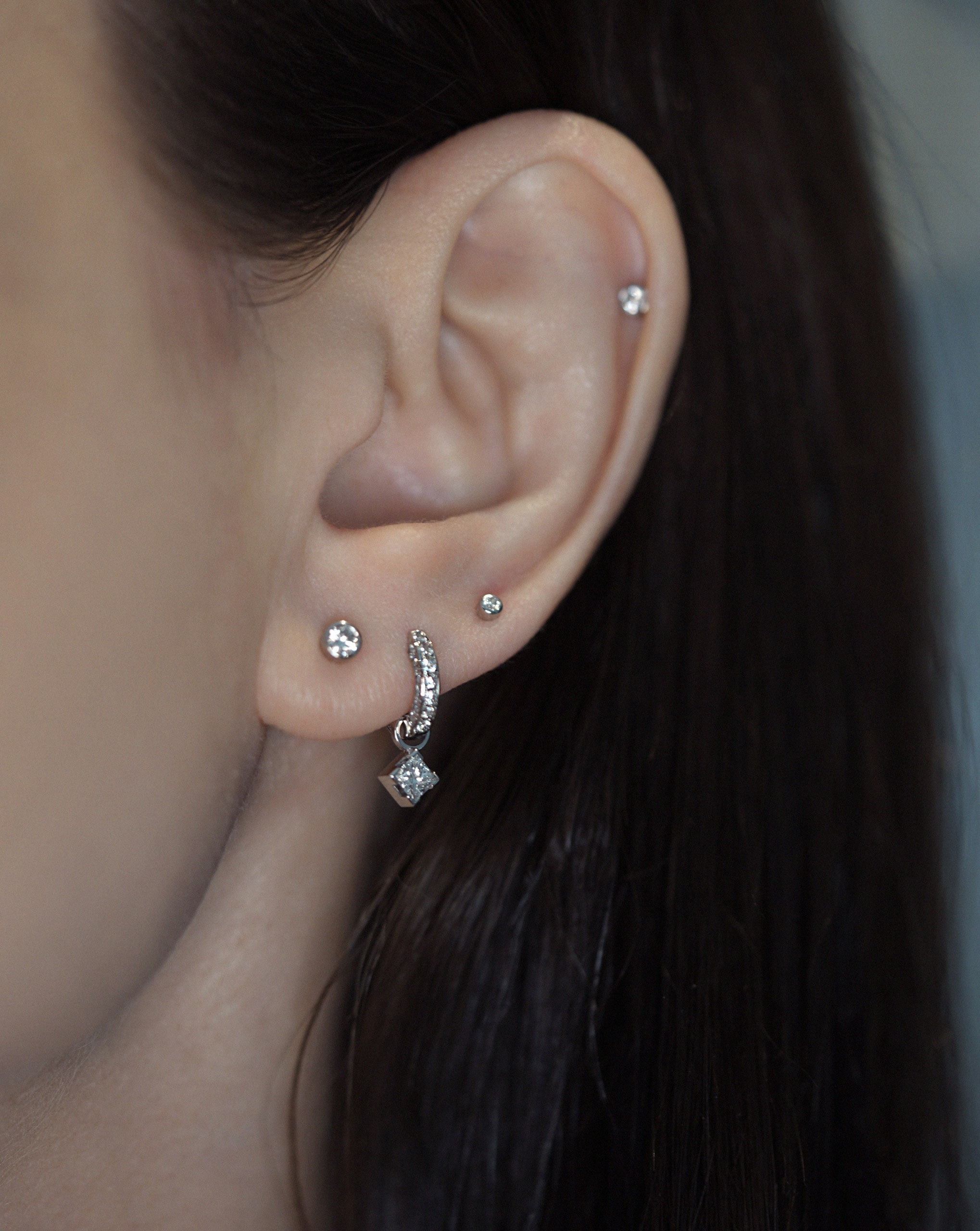
Low-profile flat-back ear jewellery may be deliberately chosen for continuous healed-piercing wear, but that does not make every stud, hoop, ring and necklace a permanent body fitting. Buy according to how you actually intend to wear the piece.
The practical details are part of the jewellery
A piece intended for frequent wear should make sense once it leaves the photograph: setting height, exposed stone edges, post length, clasp construction, balance and how easily the piece can be serviced later all matter.
Explore Ear Jewellery
·
Rings & Bracelets
·
View All Jewellery
Use the gentlest cleaning method that solves the actual problem
For straightforward solid-gold jewellery with untreated diamonds and secure settings, lukewarm water, a small amount of mild soap and gentle cleaning are usually enough for ordinary body oils and cosmetic residue.
More aggressive does not mean more professional. Toothpaste and abrasive powders can scratch metal. Bleach and strong household chemicals have no place in routine jewellery cleaning.
If you use a very soft brush around a secure diamond setting, work gently around the underside where residue collects rather than attacking the polished surfaces. Rinse carefully and dry with a soft lint-free cloth.
Never clean valuable jewellery directly over an open plughole. Use a bowl or close the drain completely before you start.
An ultrasonic cleaner is not safe simply because it is sold for jewellery
Ultrasonic cleaning is effective because vibration helps dislodge material from areas that are difficult to reach manually. The same process is why it should not be treated as a universal home-care method.
Pearls should not be cleaned ultrasonically. Emeralds commonly contain surface-reaching fractures filled with oil or resin and also need much more cautious treatment. Other gemstones may be coated, filled, treated or sensitive to heat and vibration.
There is a second problem: vibration cannot distinguish between dirt and a stone already sitting in a weakened setting. If you do not know the treatment history of a gemstone or the condition of the setting, stop experimenting and ask a jeweller.
You cannot choose a sensible care method if you do not know what the jewellery actually is. “Gold”, “diamond” and “gemstone” are incomplete descriptions. Identify the metal, fineness, stone and any known treatment first. Our
guide to reading fine jewellery claims
explains the material information worth finding before you buy — or clean — an important piece.
A jewellery box works only if the jewellery is not damaging itself inside it
Throwing every piece into one velvet-lined compartment is still throwing every piece together.
Diamonds are hard enough to scratch many other jewellery materials. Polished gold surfaces mark when they repeatedly move against other pieces. Pearls and softer gemstones should be protected from diamonds, harder stones and sharp metal edges.
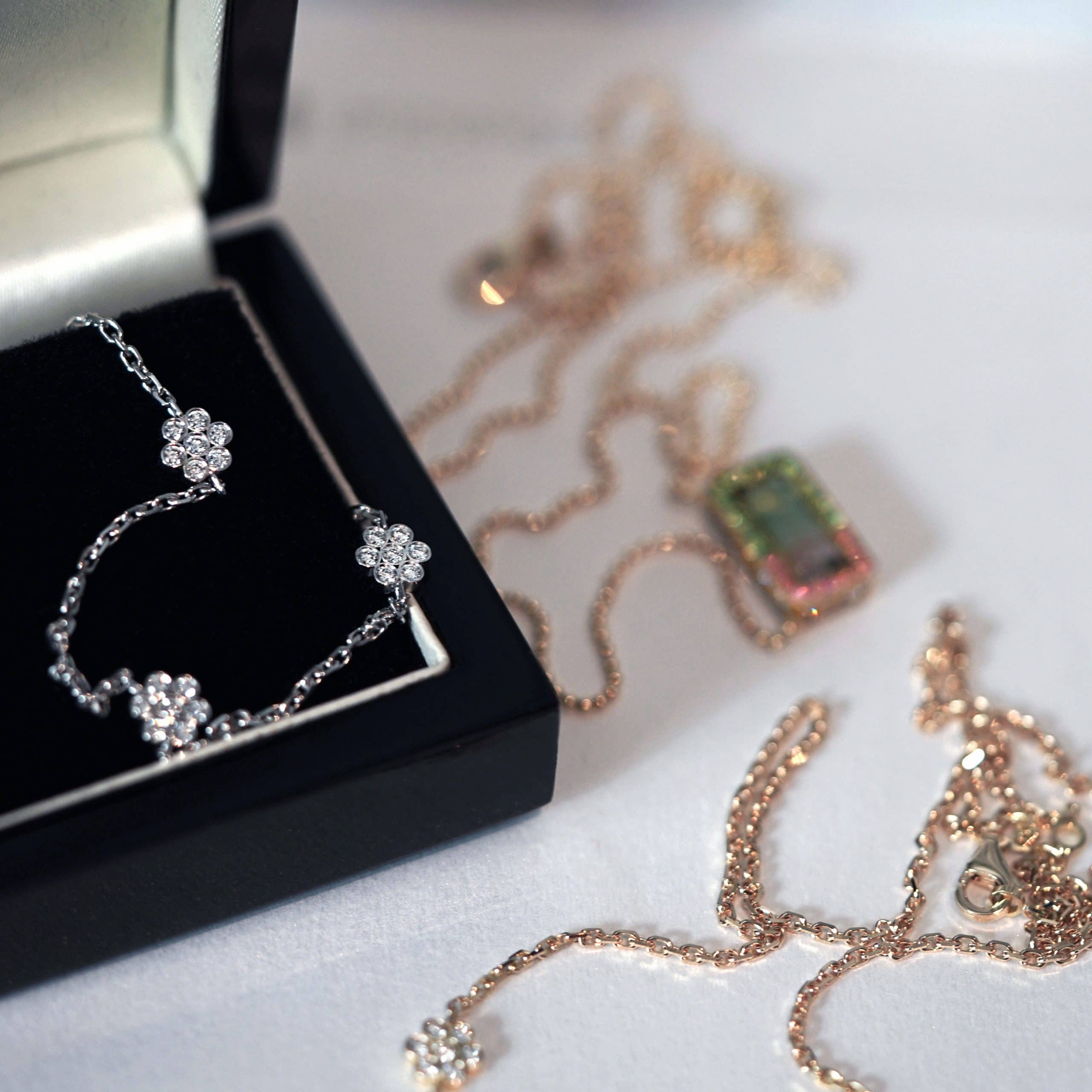
Use individual compartments or soft pouches. Fasten chains before storing them. Keep earrings together so one does not disappear into the bottom of the box. Do not allow several fine necklaces to collapse into the same space.
Storage has one job: stop jewellery rubbing, pulling and tangling against other jewellery.
The necklace problem is movement, not the suitcase
Fine chains become difficult to untangle when several loose necklaces are allowed to move around one another. Travel simply creates the perfect conditions for this: vibration, turning, compression and repeated movement while the case is closed.
Fasten each necklace and restrain it separately. A travel jewellery roll with individual necklace fixing points works well. The key is that the chain cannot migrate freely into another chain.
If a knot has already formed, do not pull both ends. Lay the chain flat and work the centre of the knot gradually. With an especially fine chain, forcing it can distort a link before the knot releases.
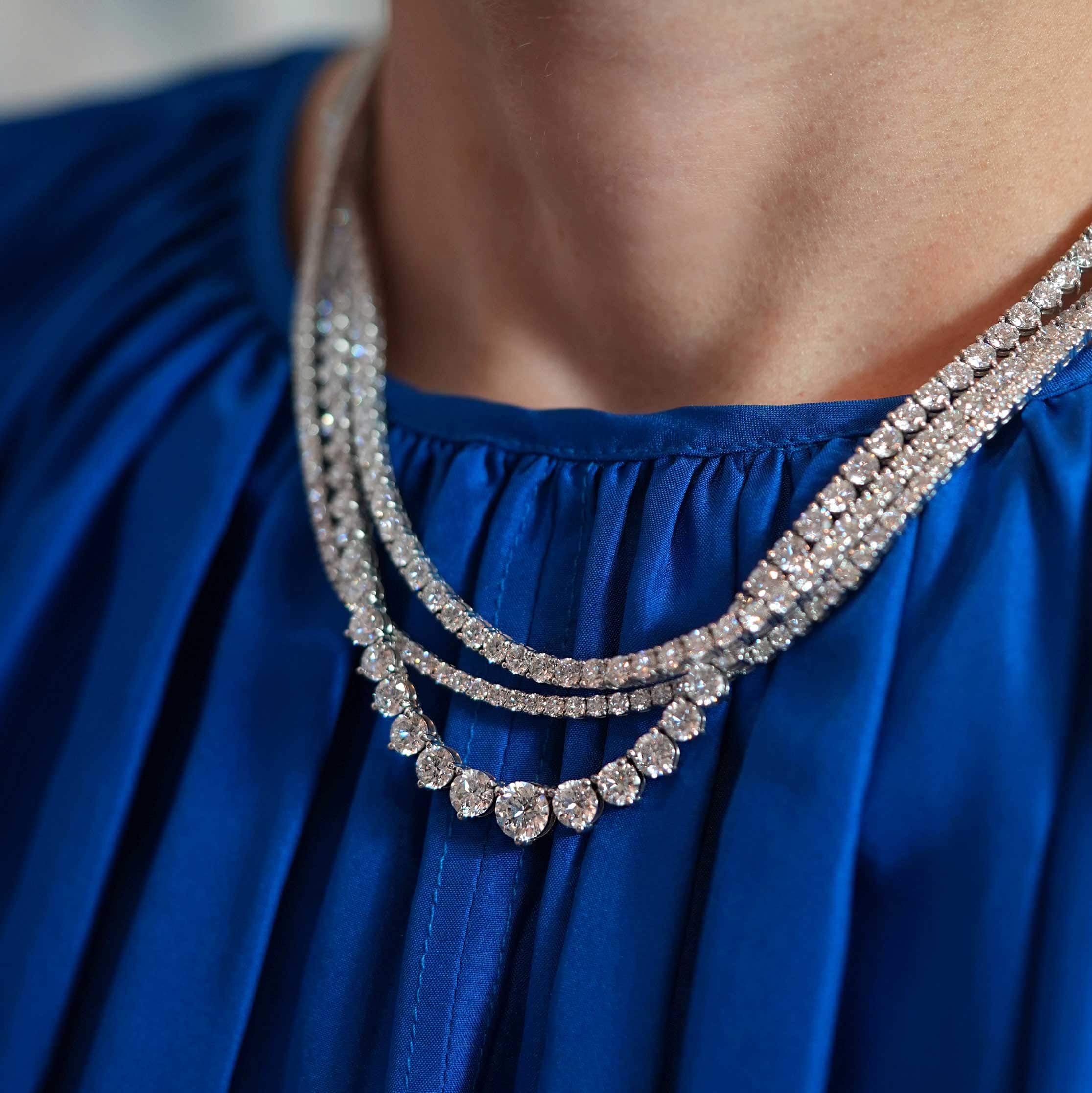
For a natural diamond line necklace, travel and storage are only part of the engineering. Articulation, setting construction, flexibility and clasp security all affect how the piece behaves. Our
Natural Diamond Tennis Necklace Guide
explains what to look for before commissioning one.

A claw catching your jumper is not a harmless annoyance
Jewellery often warns you before something is lost.
A setting that suddenly catches knitwear may have a lifted or worn claw. A stone may begin to make a faint movement. A clasp may stop closing with the same positive action. A hinge can become loose. A chain link may look stretched. An earring back that once felt secure can begin to slide too easily.
These are not cleaning problems. Stop wearing an important piece once you know the mechanism or setting is unreliable. Rebuilding or tightening a small area is generally a much better outcome than trying to replace a lost natural diamond — or the entire piece.
Lena Cohen Jewellery supports the pieces we make after purchase, including appropriate wear-and-tear repairs where possible. Current information is available in our
Care, Repairs & FAQs.
Aftercare is part of fine jewellery quality
A beautiful product photograph tells you almost nothing about what happens five years later. Before buying an important piece, ask whether the seller can explain the setting, metal, gemstone, clasp, sizing and repair route — and whether there is a real jeweller behind the product if something eventually needs attention.
This is one reason we keep Lena Cohen Jewellery closely connected to our London workshop. We sell finished pieces, make established designs to order and create fully bespoke jewellery, but the relationship does not end at checkout.
Read
why clients choose Lena Cohen Jewellery
or see what to check when comparing an
independent UK fine jewellery brand.
Fine scratches on gold are not the same as structural damage
Polished gold changes as it is worn. Rings in particular meet desks, door handles, handbags, other rings and countless everyday objects. Fine surface marks are therefore normal evidence of contact.
Cleaning removes residue. Polishing removes or redistributes a very small amount of surface metal to change the finish. These are not the same operation, and normal surface wear does not automatically justify repeated professional polishing.
Structural changes are different: a bent band, split link, loose stone, damaged claw, unreliable clasp or distorted setting should be inspected.
If you want to understand exactly what 18ct gold means, including UK fineness and hallmarking, read our
18K Solid Gold Jewellery guide.
The more important the piece, the more important its paperwork becomes
Looking after valuable jewellery is not only physical. Keep invoices, photographs, relevant stone reports, valuations and significant repair records somewhere you can find them later.
For higher-value jewellery, check exactly what your household or specialist insurance covers for loss, theft, travel and accidental damage. Do not assume a piece is fully protected simply because jewellery appears somewhere in the policy.
A diamond grading report and an insurance valuation are also not the same document. One records gemmological characteristics; the other addresses financial replacement value for a different purpose.
For significant commissions, documentation, specifications and aftercare can be considered from the beginning rather than reconstructed later. Clients looking for a completely individual piece can start with our
London bespoke jewellery service.
For commissions being managed on behalf of another person, see our
Private Client Jewellery service.
Diamond, emerald and pearl jewellery should not share one cleaning routine
Hard stone, vulnerable setting
Diamond resists scratching exceptionally well, but claws, pavé beads, links and the surrounding gold still experience impact and wear.
More care with heat and cleaning
Natural emeralds commonly contain fractures and clarity enhancement. Gentle cleaning is preferable to assuming steam or ultrasonic cleaning is suitable.
Soft surface, different rules
Keep pearls away from harder jewellery, perfume and aggressive cleaners. Wipe gently after wear rather than treating them like diamonds.
If you are choosing a gemstone specifically for frequent wear, our
Gemstone Durability Guide
explains hardness, toughness and stability — and why the jewellery type matters as much as the stone itself.
Dirt, normal wear and damage are three different things
A dull diamond may simply need cleaning. Fine marks on polished gold may be ordinary wear. A loose diamond, damaged claw, bent ring, stretched link, unreliable clasp or failing hinge is different: it needs attention. Knowing which problem you actually have prevents both unnecessary polishing and preventable jewellery loss.
Questions we hear about wearing fine jewellery
Can I wear 18ct solid gold every day?
Yes. Well-made 18ct gold jewellery can be very suitable for frequent wear. Expect normal surface marks and remove pieces before heavy impact, weight training, harsh chemicals and activities likely to pull or crush them.
Should I take my engagement ring off to shower?
An occasional shower is unlikely to destroy a sound solid-gold diamond ring, but soap, shampoo and conditioner build up around settings. Removing it also avoids unnecessary snagging, knocks and risk around a drain.
Should I remove rings for the gym?
Yes for weight training and exercises where the ring is compressed against equipment. Gold can scratch, dent or distort, and pressure on a damaged ring can also become a safety issue for the finger.
Can I swim in 18ct gold jewellery?
We recommend removing important jewellery before swimming. Pools introduce chlorine and open water introduces salt, sand, cold and a significant risk of losing the piece entirely.
What is the safest way to clean a diamond ring at home?
For an untreated diamond in a secure setting, lukewarm water, mild soap and gentle cleaning are usually sufficient. Avoid abrasive cleaners and do not continue cleaning a ring if you have noticed a loose stone or damaged setting.
Can every jewellery piece go in an ultrasonic cleaner?
No. Pearls, emeralds, many treated or fracture-filled stones and a range of heat-sensitive gemstones need different care. Ultrasonic vibration can also be unsuitable for weakened settings.
Why does my diamond suddenly look cloudy or dull?
Often the problem is surface residue rather than the diamond itself. Hand cream, sunscreen, soap, skin oils and cosmetics build up around the stone and reduce the clean passage of light through the setting.
What does it mean when a claw catches on clothing?
If a setting that was previously smooth begins catching fibres, have it inspected. A claw may be lifted, worn or damaged, and continuing to wear the piece can increase the chance of further movement or stone loss.
How do I stop fine necklaces tangling when travelling?
Fasten each chain and keep it physically separate from the others. Use individual fixing points, separate compartments or a jewellery roll that prevents the necklaces moving freely together.
Choose jewellery with wear in mind
How to Choose Diamond Stud Earrings
Size, setting, backing and fit all change how a stud behaves in daily wear.
What Fine Jewellery Claims Really Mean
Solid gold, natural stones, hallmarking and place of making explained without vague luxury language.
SEE GUIDE ABOVE
Which Gemstones Work for Everyday Wear?
A practical comparison of diamond, sapphire, ruby, emerald, tourmaline, pearl and other gemstones.
SEE GUIDE ABOVE
Fine jewellery should still make sense after years of wear
Lena Cohen Jewellery is an independent, family-run London fine jewellery business creating finished, made-to-order and bespoke pieces in solid 18ct gold, with platinum available for selected commissions, using natural diamonds, pearls and selected natural gemstones.
Our jewellery is made entirely in the UK through our London workshop and specialist British jewellery trades where a design requires them. We stay close to the object after it is sold: questions about fit, settings, adjustments, cleaning and repair come back to the small team that knows the jewellery rather than disappearing into a separate retail chain.
If you are choosing your next piece, look beyond how it photographs. Look at what it is made from, how the stone is held, how it fastens, how it will sit on the body and whether someone will still be there to help when the jewellery has actually been worn.