Bracelets may occupy the same part of the body, but they do very different jobs. A fine 18ct gold chain bracelet almost disappears into daily dressing. An Akoya pearl adds a soft point of light. A diamond flower becomes a small focal detail. A natural diamond tennis bracelet creates an uninterrupted line around the wrist. Choosing well is less about finding the “best” bracelet and more about deciding how much presence, movement and structure you actually want.

Which type of fine bracelet should you choose?
Choose a fine chain bracelet when you want something light and easy to combine. Choose Akoya pearls when you want softness and a quieter visual point. Choose a diamond chain bracelet when you want one small focal motif. Choose a tennis bracelet when you want the whole wrist line to carry natural diamonds.
A bracelet can be a chain, a line, a motif or a complete wrist statement
A useful way to compare bracelets is to stop thinking first about gemstone type and look at the underlying construction.
A fine chain bracelet moves freely and leaves much of the wrist visually open. A pearl bracelet adds one or several soft points along that chain. A diamond motif concentrates brilliance in one place. A tennis bracelet distributes diamonds continuously around the wrist.
That structural difference changes the whole character of the piece before carat weight or gemstone size even enters the conversation.

Solo Akoya Pearl Bracelet
The
Solo Akoya Pearl Bracelet
uses one round Akoya pearl on a fine 18ct gold micro-ball chain.
Because there is only one pearl, the eye still reads the bracelet as a fine gold chain first. The pearl acts as a single soft focal point rather than turning the whole wrist into a pearl piece.
This works particularly well for clients who want a bracelet that remains light enough to sit beside a watch or another fine piece.

Trio Akoya Pearl Bracelet
The
Trio Akoya Pearl Bracelet
uses three Akoya pearls spaced across a fine solid 18ct gold chain.
The extra pearls create rhythm across the wrist without turning the design into a traditional full pearl strand.
Choose between Solo and Trio according to whether you want one quiet focal point or a little more repetition along the chain.

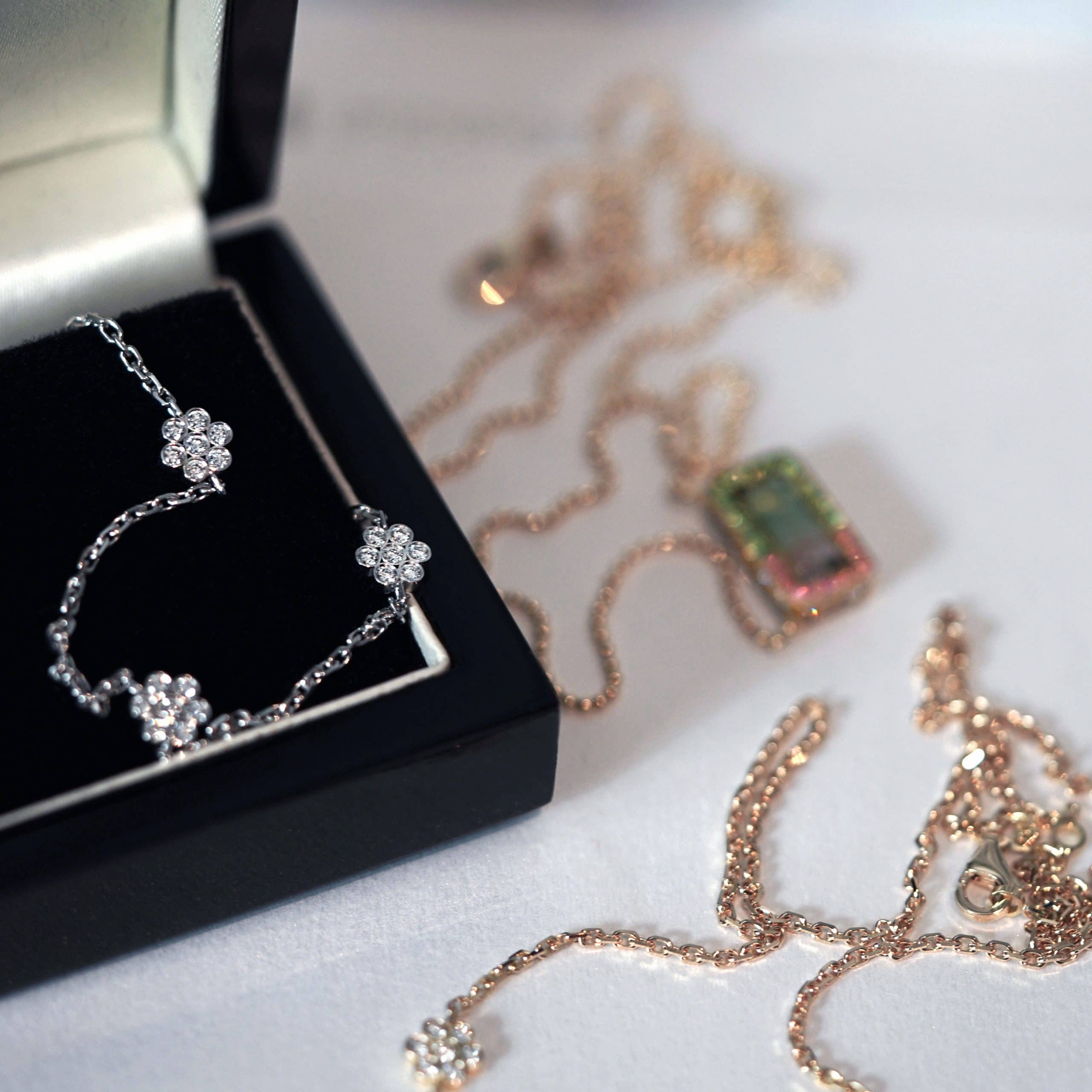
Diamond Flower Chain Bracelet
The
Diamond Flower Chain Bracelet
keeps the lightness of a fine chain but replaces the pearl with a natural-diamond flower motif.
This creates a clearer point of brilliance while leaving most of the wrist visually open.
It is a useful middle ground between a very quiet pearl bracelet and a full natural-diamond tennis line.

Choose continuous diamond presence rather than one small focal point
A tennis bracelet works differently from every bracelet above because the diamonds run continuously around the wrist rather than concentrating in one position.
That gives the piece greater visual continuity and makes fit, setting and clasp much more important parts of the design.
Our
Natural Diamond Tennis Bracelet
is available in several total carat weights in solid 18ct gold, while higher-carat and fully bespoke versions can be developed separately.

Carat, clasp and mixed-cut options deserve their own guide
For a detailed comparison of 2ct, 3ct, 4ct, high-carat and bespoke mixed-cut designs, continue to our
Natural Diamond Tennis Bracelet Guide.

Decide whether the bracelet should sit close or move freely
A fine chain bracelet can tolerate a little more movement because the piece itself is light. A tennis bracelet usually benefits from a more considered fit because its weight and continuous setting make excessive movement more noticeable.
A bracelet that is too loose may rotate constantly, catch more easily or collide with a watch. A bracelet that is too tight can feel restrictive and may place unnecessary pressure on links or settings.
If you already own a bracelet that fits well, measuring its wearable length is often more useful than measuring the wrist alone.

The watch already occupies visual and physical space
A watch is part of the wrist composition whether or not you think of it as jewellery.
Fine chain and pearl bracelets usually sit more quietly beside a watch because they contribute less width and weight. A substantial tennis bracelet may work better on the opposite wrist if both pieces are competing for the same visual space.
There is no requirement for the bracelet and watch to match exactly in metal colour. What matters more is that their scale and physical movement do not fight each other.
Yes — but different constructions behave differently together
A fine chain bracelet can sit beside another chain without dominating it. Pearls introduce texture. A tennis bracelet brings a continuous line and will usually become the strongest piece in the stack.
The more substantial the bracelet, the more useful negative space becomes. Two or three fine pieces can look deliberate; several wide diamond bracelets packed together can quickly obscure the design of each one.
A useful rule is to let one bracelet provide the strongest line and allow the others to support it.
Treat an Akoya pearl bracelet more gently than a diamond bracelet
Akoya pearls are more delicate than diamonds and solid gold. Put pearl jewellery on after perfume, lotions and cosmetics, and remove it before activities involving chemicals, abrasion or heavy impact.
Wipe pearls gently with a soft cloth after wear rather than treating them like a diamond setting.
For wider care advice, see our
fine jewellery care guide.

Bracelets live in one of the busiest parts of the body
The wrist constantly comes into contact with desks, sleeves, bags, watches and other jewellery. That makes construction and materials particularly important.
Lena Cohen bracelets are made in solid 18ct gold rather than plated base metal, with natural diamonds and Akoya pearls used across the collection.
For more on the metal itself, read our
guide to solid gold jewellery in the UK.
Start with how much information you actually have
A fine chain or pearl bracelet can be relatively easy to gift when the design includes some adjustment in length.
A tennis bracelet deserves more attention to fit, scale and carat weight, especially at the higher end of the collection.
If you are buying for someone else and are unsure, send us a photograph of the bracelets or watch she already wears together with your budget. We can help narrow the choice rather than asking you to guess blindly.
When length, stone shape or clasp should be designed around you
A bespoke bracelet can be developed around the wrist rather than adjusted after the design has already been fixed.
For natural diamond tennis bracelets, this may include exact length, total carat weight, diamond shape, setting style, clasp and the relationship between individual stones. Round, oval, emerald, marquise, pear and mixed-cut directions can all be explored where technically appropriate and supported by the brief.
For a completely individual project, see our
bespoke fine jewellery service.

Fine bracelets made to be part of real daily dressing
Lena Cohen Jewellery is an independent, family-run London fine jewellery business working in solid 18ct gold, natural diamonds, selected natural gemstones and pearls.
Our bracelets are made in the UK through our London workshop and established British specialist jewellery trades where required.
The collection ranges from fine chain and Akoya pearl pieces to substantial natural-diamond tennis bracelets and bespoke commissions developed directly with the client.
Choosing the right bracelet
What is the difference between a chain bracelet and a tennis bracelet?
A chain bracelet leaves much more of the wrist visually open and may carry one small motif or gemstone. A tennis bracelet creates a continuous line of diamonds around the wrist and therefore has much greater visual and physical presence.
Are Akoya pearl bracelets suitable for everyday wear?
They can be worn regularly, but pearls need gentler care than diamonds. Keep them away from perfume, lotions, chemicals and abrasive surfaces, and wipe them gently after wear.
Can I wear a fine gold bracelet with a watch?
Yes. Fine chain and pearl bracelets often sit comfortably beside a watch because they use less width and visual weight. More substantial tennis bracelets may work better on the opposite wrist depending on scale and fit.
Should bracelets fit tightly?
They should feel secure without restricting the wrist. The ideal amount of movement depends on the construction: a fine chain can tolerate more movement than a heavier diamond line.
Can Lena Cohen make a bracelet to a specific length?
Yes. Bespoke bracelet projects can be developed around the required wrist length. For tennis bracelets, total carat weight, diamond shape, setting and clasp can also be discussed.
Are Lena Cohen bracelets solid gold?
The fine bracelets featured here are made in solid 18ct gold rather than gold-plated base metal, with natural diamonds and Akoya pearls used across selected designs.
Choose the role first. Then choose the bracelet.
A pearl bracelet, diamond motif chain and natural-diamond tennis bracelet can all be made in solid 18ct gold and still feel completely different on the wrist.
Decide whether you want quiet detail, texture, one point of brilliance or a continuous diamond line. Once that is clear, the right construction becomes much easier to choose.