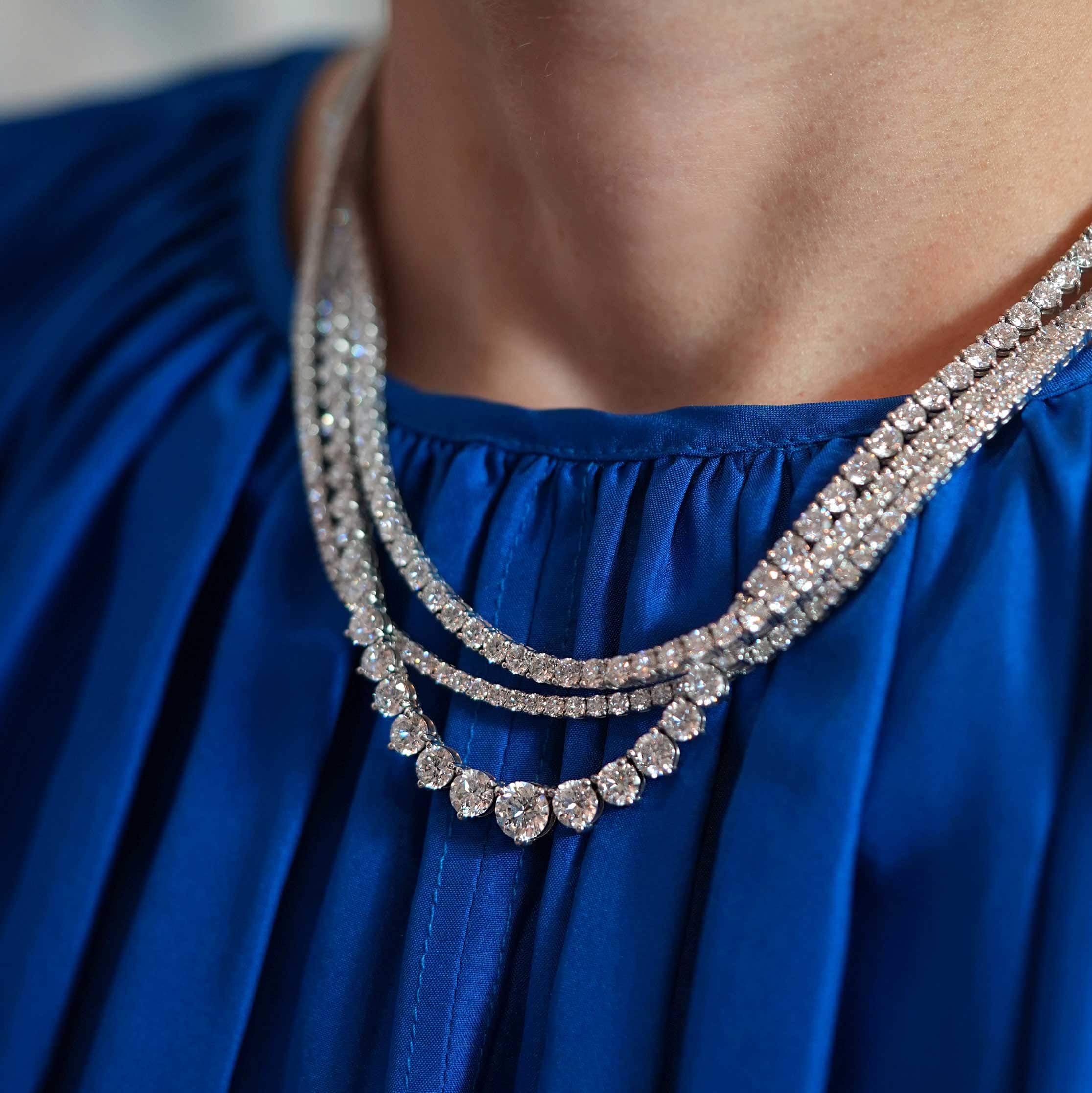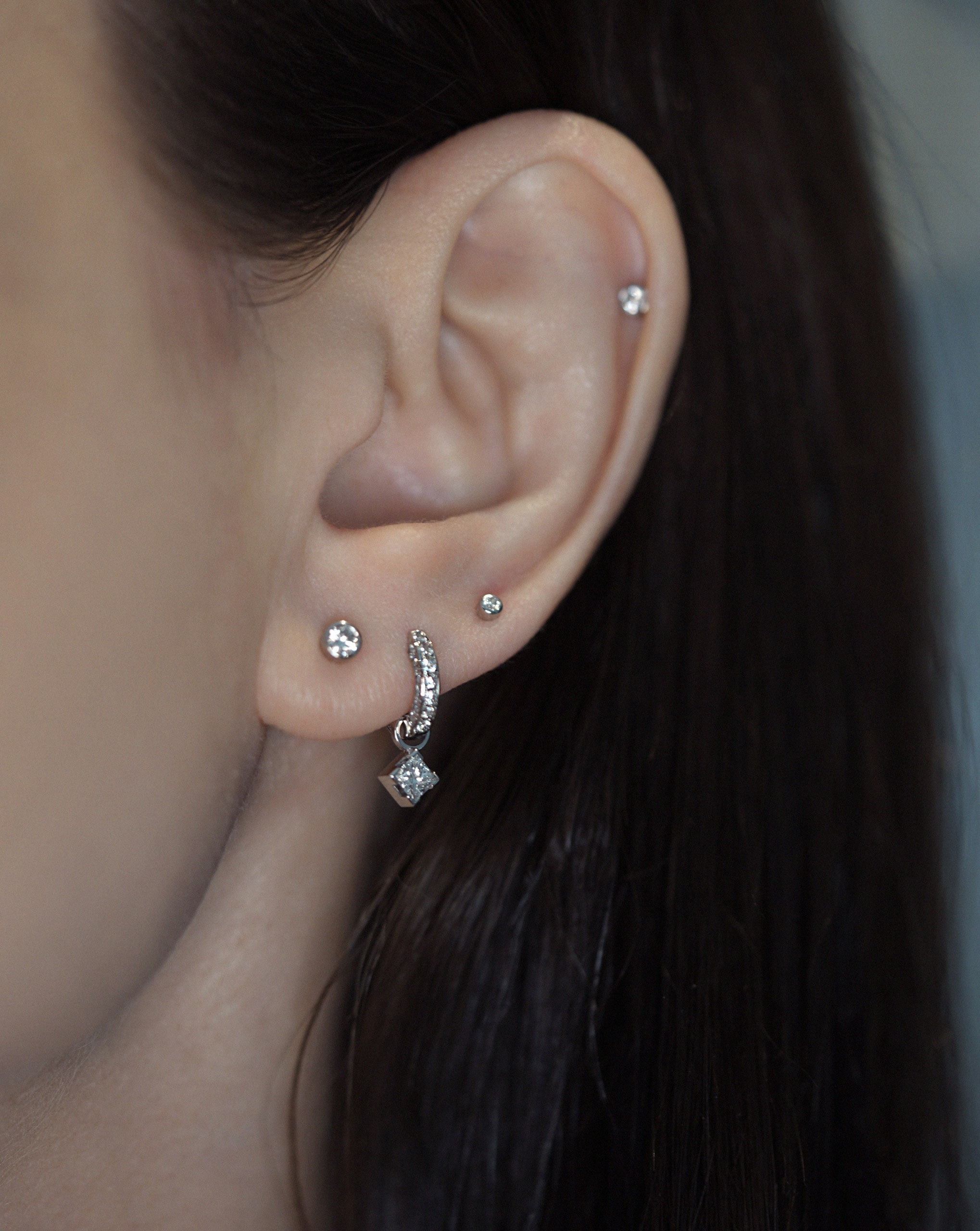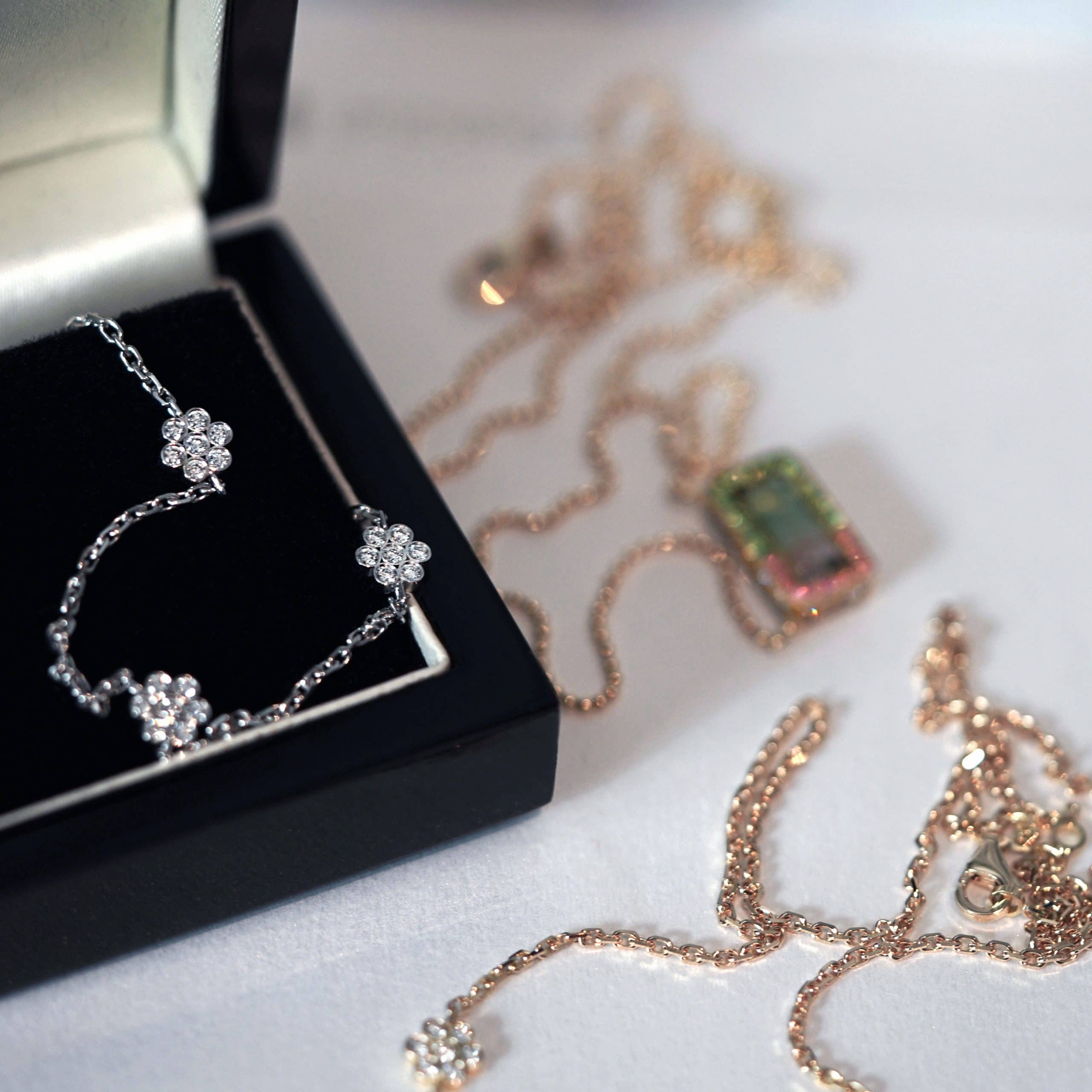
The real benefits of wearing earrings are practical and visual rather than medical. Earrings bring light and shape close to the face, can change the balance of an outfit in seconds, require no ring sizing, work with anything from one lobe piercing to a full curated ear, and can become some of the most frequently worn pieces in a fine jewellery collection. The best earrings combine good design with suitable weight, secure construction, appropriate fit and materials chosen for repeat wear.
What are the benefits of wearing earrings?
Earrings are one of the easiest pieces of jewellery to use every day. A small stud can add light near the face without changing the rest of an outfit; a hoop introduces shape; a longer earring adds movement; and several small earrings can create a completely different composition across the ear. Unlike rings, earrings do not require a finger size, and unlike a necklace, they remain visible with many necklines and layers of clothing.

Good earrings work hard without needing to be complicated
Earrings occupy an unusual position in a jewellery wardrobe. They sit close to the face, remain visible while you move and can be changed without altering the clothes underneath them.
That makes even a very small piece useful. The effect can come from a point of diamond light, the outline of a hoop, a flash of coloured gemstone or simply a polished line of gold.

The practical advantages of earrings in a fine jewellery wardrobe
They bring diamonds and gemstones close to the face
A diamond stud does not need to be large to be noticed. Its position means it catches light close to the eyes and face, where even a restrained piece remains visible.
They change the outline of a look
A stud creates a point. A hoop creates a curve. A threader or drop introduces a vertical line and movement. The jewellery can alter the feel of an outfit without changing the outfit itself.
The same pair can move between very different clothes
Simple diamond studs or small gold hoops can work with tailoring, knitwear, denim or evening clothes. Their usefulness comes from not belonging to only one outfit.
They do not have to be worn as a matching pair
A single stud, mismatched earrings or several piercings make it possible to build a combination around the individual ear rather than treating earrings as a fixed matching set.
They can be simpler to buy as a gift
You do not need to know a finger size. You still need to consider pierced ears, metal preference, scale and the type of backing, but one major piece of sizing information disappears.
A good pair can become part of your daily uniform
Fine earrings do not have to be saved for an occasion. Comfortable proportions, secure construction and versatile design often make them some of the most frequently worn jewellery you own.
Earrings can make repeated clothes feel different
One of the most useful things about jewellery is that it lets a small wardrobe do more. The same white shirt, knit or black dress can feel cleaner with tiny diamond studs, sharper with gold hoops or more decorative with movement and colour.

This does not require a large jewellery collection. A small rotation of pieces that perform different jobs is often more useful than many earrings that all create the same effect.
We explore the same idea in our guide to
easy outfits and everyday jewellery
where jewellery is used to change repeated clothes rather than constantly replacing them.
Why are diamond studs so useful?
A diamond stud is perhaps the simplest example of an earring doing a great deal with very little material. It does not depend on movement or a large silhouette. A well-cut diamond supplies the light; the setting determines how that light sits on the ear.

That simplicity makes diamond studs useful alone, beside a hoop, as the quieter side of a mismatched pair or as one element of a multiple-piercing ear.
Choosing them well involves more than carat weight. Our
Diamond Stud Earrings Guide
looks in detail at size, shape, diamond cut, settings, backs and fit.

Earrings can evolve without replacing what you already own
A classic lobe piercing can carry one pair for years. Add a second lobe, high lobe or cartilage piercing and the same earrings can become the anchor for a completely different arrangement.

This is one reason fine ear jewellery lends itself particularly well to building gradually. One good stud can be joined later by a smaller diamond, a huggie, a charm or a helix piece rather than being made redundant by the next purchase.
For multiple piercings, our
18K Gold Curated Ear Guide
explains how to combine lobe and cartilage jewellery while keeping proportion and empty space in the composition.

One of the benefits of earrings is how easily they can become personal
A pair of earrings does not always need to be identical. One ear can carry a stud while the other carries a small hoop. A coloured gemstone can appear on only one side. Several piercings can be arranged differently while the gold, diamonds or proportions hold the look together.

This flexibility makes earrings unusually adaptable to jewellery collected over time. A single lost pair does not necessarily make the surviving earring useless either: a good single stud may become part of an asymmetric ear.
See our
guide to mismatched fine earrings
for ways to combine different pieces without making the result feel random.
Studs and hoops perform different jobs
A stud sits primarily on the surface of the ear. A hoop creates a visible outline beyond it. That makes a hoop useful when you want the jewellery to contribute more shape without moving into a long drop or statement earring.

Small huggies can remain close to the lobe, while wider diamond hoops carry more visual weight. Neither is automatically better; they simply solve different styling problems.
Our guide to
styling diamond hoops in a curated ear
shows how a hoop can work as an anchor while smaller studs provide quieter points around it.
The best-looking earring is not useful if you avoid wearing it
Wearability depends on more than appearance. Weight, setting height, hoop diameter, post length and backing can all affect how an earring behaves on the ear.

A stud with a post that is too long may tilt or move. A backing that offers too little support may allow a heavier front to droop. A hoop with the wrong internal diameter may sit very differently from the photograph that inspired the purchase.
This is why useful fine jewellery descriptions should explain construction as well as appearance. Our guide to
reading fine jewellery claims
looks at material, hallmarking, stone information, place of making, fit and service rather than relying on words such as “luxury” alone.
Do you need different earrings for your hair length or face shape?
Not according to a rigid formula. Short hair may expose more of the ear, while long hair can partially hide a small stud, but neither situation tells you what you should wear.
The more useful question is how visible you want the earrings to be. If you want a quiet glint through long hair, a small diamond may be exactly right. If you want the earring to remain visible from a distance, a hoop or elongated form gives it more outline.
Personal proportion is more useful than universal rules about which face “needs” which shape.
Do earrings have health benefits?
We would not choose or recommend earrings for supposed medical, hormonal, fertility or therapeutic effects. Jewellery has a long history of symbolism, ritual and cultural meaning, but that is different from evidence that wearing a particular metal or gemstone treats a health condition.
The useful benefits of earrings are much more straightforward: appearance, personal expression, versatility, repeat wear and the pleasure of owning an object that has been made well.
Material matters more when earrings are worn often
If an earring is intended to become an everyday piece, it makes sense to know what it is actually made from. Solid gold and plated jewellery are not the same material, even when they look similar when new.

With diamond or gemstone earrings, clarity about the stones matters too. A product page should identify the metal, tell you what the stone is, explain the construction and give enough dimensional information to understand what you are buying.
For an overview of our materials and making, see
18K Solid Gold Jewellery by Lena Cohen
A useful earring starts with the job it needs to do
For something you can wear almost anywhere
Start with a well-proportioned diamond or gemstone stud in a simple setting.
For more visible shape without a long earring
Choose a close-fitting huggie or a small hoop.
For movement
Look at a threader, charm or fine drop rather than simply choosing a larger stud.
For multiple piercings
Start with one anchor earring, then add smaller supporting pieces rather than making every piercing equally strong.
For a gift
Check whether the recipient wears yellow or white metal, studs or hoops, small or stronger jewellery, and whether the design is sold as a single or a pair.
Questions about wearing and choosing earrings
What is the main benefit of wearing earrings?
Their position makes a small amount of jewellery highly visible. Earrings can introduce light, shape, colour or movement near the face without changing the rest of an outfit.
Can earrings make a simple outfit look more finished?
Yes. Because earrings sit close to the face, even small studs or hoops can give very simple clothing a more deliberate finish.
Are earrings a good fine jewellery gift?
They can be. Earrings do not require ring sizing, but it is still useful to know whether the recipient has pierced ears, which metal they wear, their preferred scale and whether they normally choose studs, hoops or more decorative designs.
Do earrings have proven health benefits?
We would not treat earrings, gemstones or precious metals as medical therapies. Choose earrings for design, fit, materials and personal meaning rather than claims about fertility, hormones, energy or treatment of health conditions.
What type of earrings are easiest to wear every day?
Small studs and close-fitting hoops are popular everyday choices because they are visually versatile. The best design still depends on your ear, preferred scale, jewellery habits and the way the backing or hoop fits.
Do both earrings need to match?
No. Matching pairs remain classic, but a single stud, asymmetric pair or intentionally different ear stack can look equally considered when the pieces share something in common such as metal, stones, scale or design language.
Useful Lena Cohen guides for choosing and styling earrings
How to Choose Diamond Stud Earrings
Size, shape, cut, setting, backing and fit explained in more detail.
How to Style Diamond Hoops
How hoops create shape and work with quieter studs in a multi-piercing ear.
Create an 18K Gold Curated Ear
Building an ear with lobe, upper-lobe and cartilage jewellery without overcrowding it.
Fine earrings designed to be worn, not saved
Lena Cohen Jewellery is an independent London fine jewellery brand working in solid 18k gold with natural diamonds, pearls and precious gemstones.
Our ear jewellery includes diamond and gemstone studs, hoops, huggies, charms, threaders and fine jewellery for healed cartilage piercings, with many designs available as singles as well as pairs.