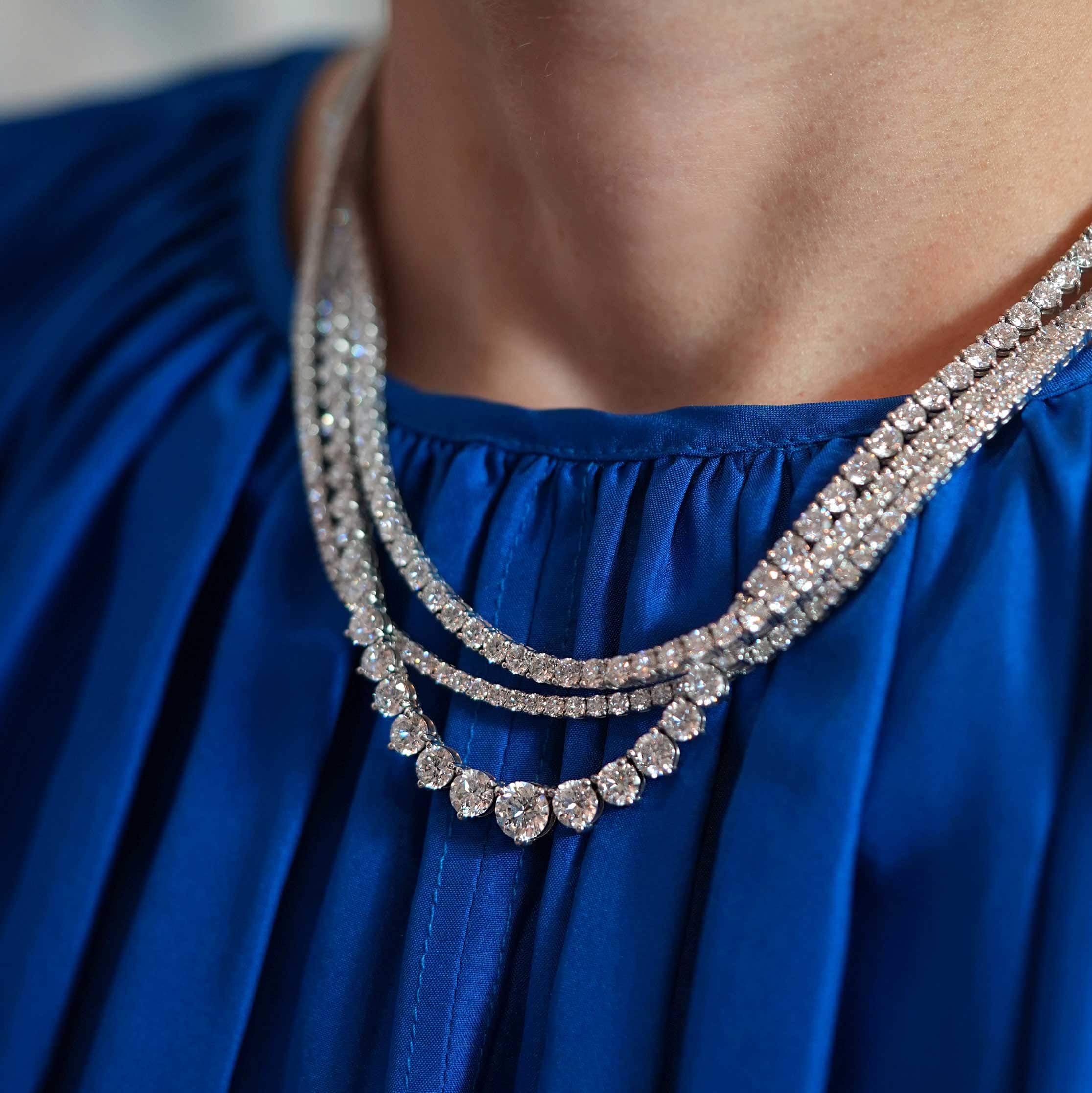
Natural Diamonds · Solid 18ct Gold · Made to Order
A good pair of diamond studs begins with proportion, diamond quality and fit — not carat weight alone.
The visible size of the diamond, its shape and cut, the height of the setting, the precious metal, post length and backing all influence how the finished earrings look on the ear.
For a significant pair, the two natural diamonds should also work together as a pair: similar face-up dimensions, compatible proportions, colour and light performance matter alongside the grading information on paper.

Quick Answer
What should you look for in diamond stud earrings?
Start with the size you want to see on the ear, then compare diamond shape, cut, colour, clarity and face-up dimensions. Choose the setting and fitting after that, because they determine how closely the diamond sits and how the earring feels in wear.
For a matched pair, look beyond two similar carat weights. The diamonds should also appear balanced together when viewed face-up.
What Size Diamond Studs Should You Choose?
Carat weight describes weight rather than visible diameter. Two diamonds of the same carat weight can face up differently depending on their proportions and shape.
For earrings, look at both the carat weight and the actual millimetre dimensions of the stone. What matters on the ear is the visible spread.
| Approx. size per ear | Approx. round diameter | Visual effect |
|---|---|---|
| 0.10–0.30ct | Approx. 3.0–4.3mm | A small point of diamond light; useful for additional lobe or upper-ear piercings. |
| 0.30–0.60ct | Approx. 4.5–5.2mm | A clearly visible everyday stud with moderate presence. |
| 0.60–1.00ct | Approx. 5.7–6.5mm | A significant lobe stud with stronger face-up presence. |
| 1.00ct+ per ear | Approx. 6.5mm+ | A substantial natural-diamond pair where setting, backing and fit become particularly important. |
These dimensions are useful guides rather than fixed rules. Diamond proportions vary, and elongated shapes distribute their weight differently from rounds.

Classic Natural Diamond Pair
Choosing a Significant Round Brilliant Pair
Round brilliant studs remain the clearest reference point for a classic diamond pair because the shape is familiar, symmetrical and designed for strong brilliance.
For a significant pair, the buying decision should go further than selecting two diamonds with the same headline carat weight. Measurements, face-up spread, cut proportions, colour, clarity and the way the stones appear together all matter.
The
2ct Natural Diamond Stud Earrings
show this approach at approximately 1ct per ear. The shown pair is G colour / VS1 clarity with GIA-certified natural round brilliant diamonds, flower screw backs and a 6mm standard post that can be adjusted before production.
Smaller and larger matched pairs can also be commissioned around the preferred natural diamond size, quality, visible spread, metal and budget.

Which Diamond Shape Is Right for Stud Earrings?
Shape changes the outline of the earring, the way carat weight is distributed and the type of light the diamond returns. It is therefore both a visual and technical choice.
| Shape | What changes visually | What to consider |
|---|---|---|
| Round brilliant | Symmetrical outline with concentrated brilliance. | A useful reference shape for comparing visible diameter and matching a pair. |
| Oval | Elongated face-up spread with softer curved ends. | Compare length-to-width ratio and symmetry carefully across the pair. |
| Princess | Square geometry with brilliant-style faceting. | Corner protection and setting precision are particularly visible. |
| Pear | An asymmetric outline with one rounded and one pointed end. | Orientation becomes part of the design. |
| Marquise | A long, narrow outline that creates strong direction on the ear. | Length-to-width ratio and symmetry affect how balanced the pair appears. |
| Emerald / step cut | Broad, open facets and long mirror-like reflections. | Clarity and facet pattern are more visible than in many brilliant cuts. |

An Individual Diamond Shape
When You Want More Face-Up Presence Than a Classic Round
Carat weight can be distributed very differently across diamond shapes. An elongated stone can create a broader visible outline across the lobe while keeping a clean stud format.
The
Atelier Cut Elongated Natural Diamond Stud Earrings
were developed around precisely that idea.
The original private-client pair uses 2.20ct total natural diamonds, G colour and VS1 clarity. Each diamond measures approximately 7.2 × 4.7mm. The cut combines an elongated rectangular outline with mirror-step reflections and more complex brilliant faceting.
New Atelier Cut pairs are made to order from approximately 0.50ct per earring and can be developed around the preferred carat weight, colour, clarity, proportions, metal, setting height, backs, post length and budget.

Cut, Colour and Clarity for Diamond Stud Earrings
For stud earrings, cut and overall light performance deserve considerable attention because the diamonds are seen face-up and at normal conversational distance.
Round brilliant diamonds with strong cutting can produce a lively result across a wide range of clarity grades. Step cuts such as emerald cuts have larger open facets, so inclusions and differences in transparency can be easier to see.
Colour should also be considered together with the metal and with the second diamond in the pair. Slight warmth can work naturally with yellow gold, while white gold and platinum tend to present the diamond against a cooler metal colour.
For important natural diamonds, certification provides useful independent grading information. It still remains important to compare the stones visually as a pair.
How Should Two Diamonds Be Matched for Earrings?
Two diamonds can have similar grading information and still look different when worn together.
For a significant pair, compare:
Face-up measurements — the visible width and diameter of each diamond.
Proportions — especially important with elongated and fancy shapes.
Colour relationship — the pair should read consistently when seen together.
Cut character and light return — one stone should not visually overpower the other.
Overall balance — the pair should look intentionally matched on the ears.
For made-to-order Lena Cohen pairs, the selected natural diamonds and their key specifications are confirmed before production.

Choosing the Setting
The setting controls how much metal is visible around the diamond, how high the stone sits and how the finished stud presents on the ear.
| Setting | Character | Fit consideration |
|---|---|---|
| Prong | Open setting with relatively little metal around the diamond. | Setting height varies according to the construction and stone. |
| Martini | A compact conical setting around a solitaire diamond. | Useful when a closer-sitting profile is preferred. |
| Bezel | A fine metal rim follows the diamond outline. | Creates a smooth outer edge and a stronger visible gold frame. |

18ct Yellow Gold, White Gold or Platinum?
Lena Cohen fine jewellery is made in solid 18ct gold, with platinum available for selected made-to-order and bespoke diamond work.
Yellow gold creates a warmer frame around the diamond. White gold gives a cooler visual transition between metal and stone. Platinum is also available where the commission calls for it.
The useful choice is usually the metal she already wears most, particularly for a pair intended to become part of an established jewellery wardrobe.
Backs and Post Length Are Part of the Specification
Flower screw backs, flat backs and conventional butterfly backs solve different practical requirements. Post length also affects how closely the front sits and how much movement the earring has behind the ear.
Selected Lena Cohen designs can be made with adjusted post or barbell lengths, and bespoke pairs can be discussed around the preferred fitting before production.
For the detailed comparison, see
Secure Earring Backs & Diamond Stud Fit.

Choosing Diamond Studs for Mature or Softer Earlobes
Earlobes can change over time, and a pair that once sat upright may begin to tilt or sit lower. Setting profile, total weight, post length and support behind the ear can then become more important.
Our dedicated
Diamond Studs for Older Ears guide
covers softer lobes, stretched piercing holes, closer settings and custom fitting in detail.

Buying Singles for More Than One Piercing
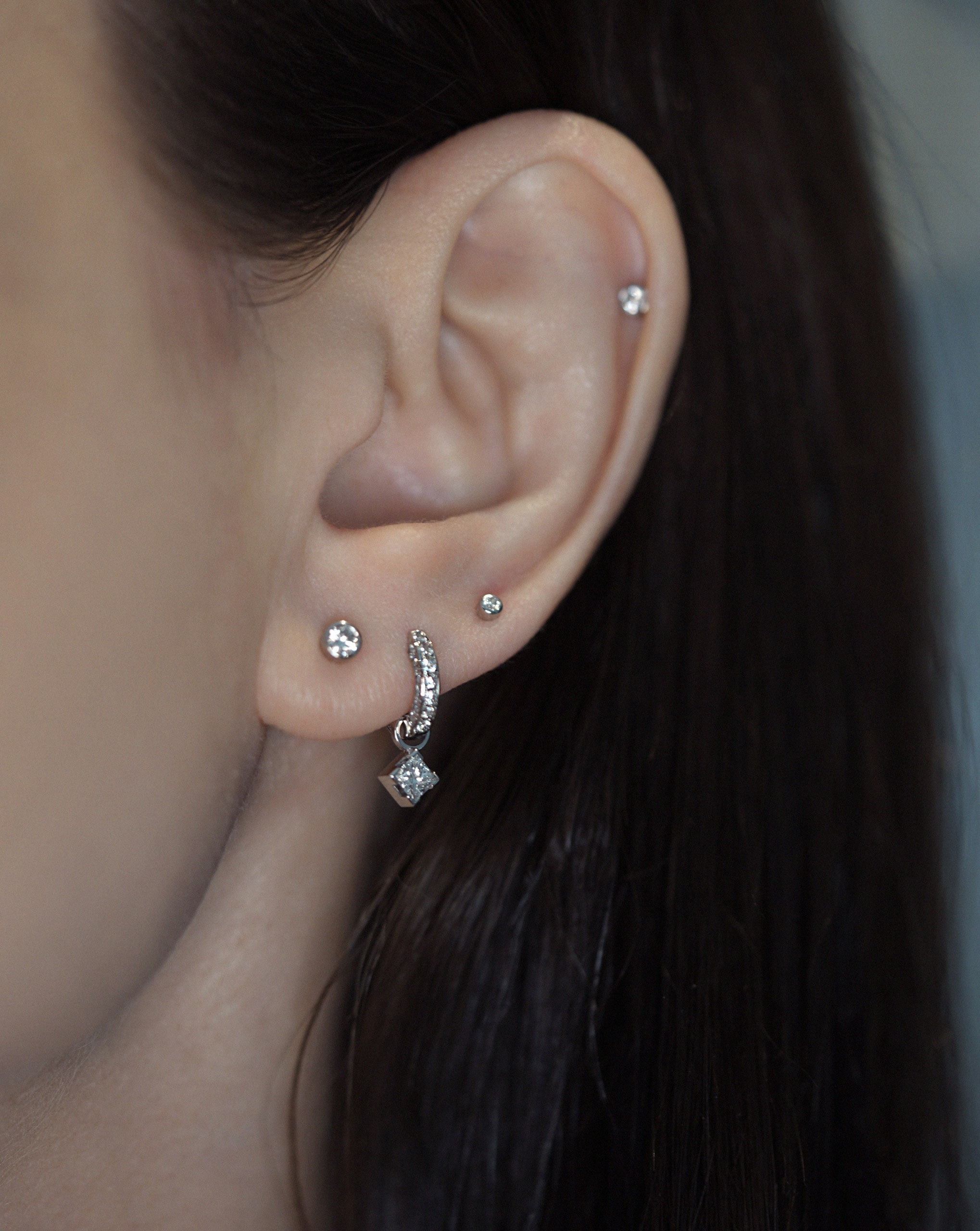
Selected Lena Cohen diamond studs are available individually as well as in pairs. This allows a principal pair to be combined with smaller natural diamonds through additional lobe or helix piercings.
For a complete approach to graduating the stones across several piercings, read
From Lobe to Helix: Building a Natural-Diamond Stud Set.

What Determines the Price of Diamond Stud Earrings?
The price of natural diamond studs is determined by a combination of the diamonds and the finished jewellery rather than one figure alone.
Diamond size and shape affect both rarity and face-up appearance.
Cut, colour and clarity influence diamond quality and availability.
Matching a pair can require comparing several natural diamonds to achieve the right relationship.
Certification is relevant for significant diamonds where independent grading documentation is appropriate.
Setting and fitting include the gold or platinum work, backs, posts and any individual adjustments.
Current prices and specifications are shown on the relevant product pages, while made-to-order and bespoke pairs are quoted around the selected diamonds and brief.

Made to Order & Bespoke
When to Have Diamond Studs Made Around Your Brief
Made-to-order work begins with an existing design and develops the final specification around the selected diamonds, metal and fitting.
A fully bespoke pair can begin more openly: with a preferred natural diamond shape, carat range, face-up dimensions, metal, setting style, backing, post length, budget or simply a reference for how you want the finished earrings to look.
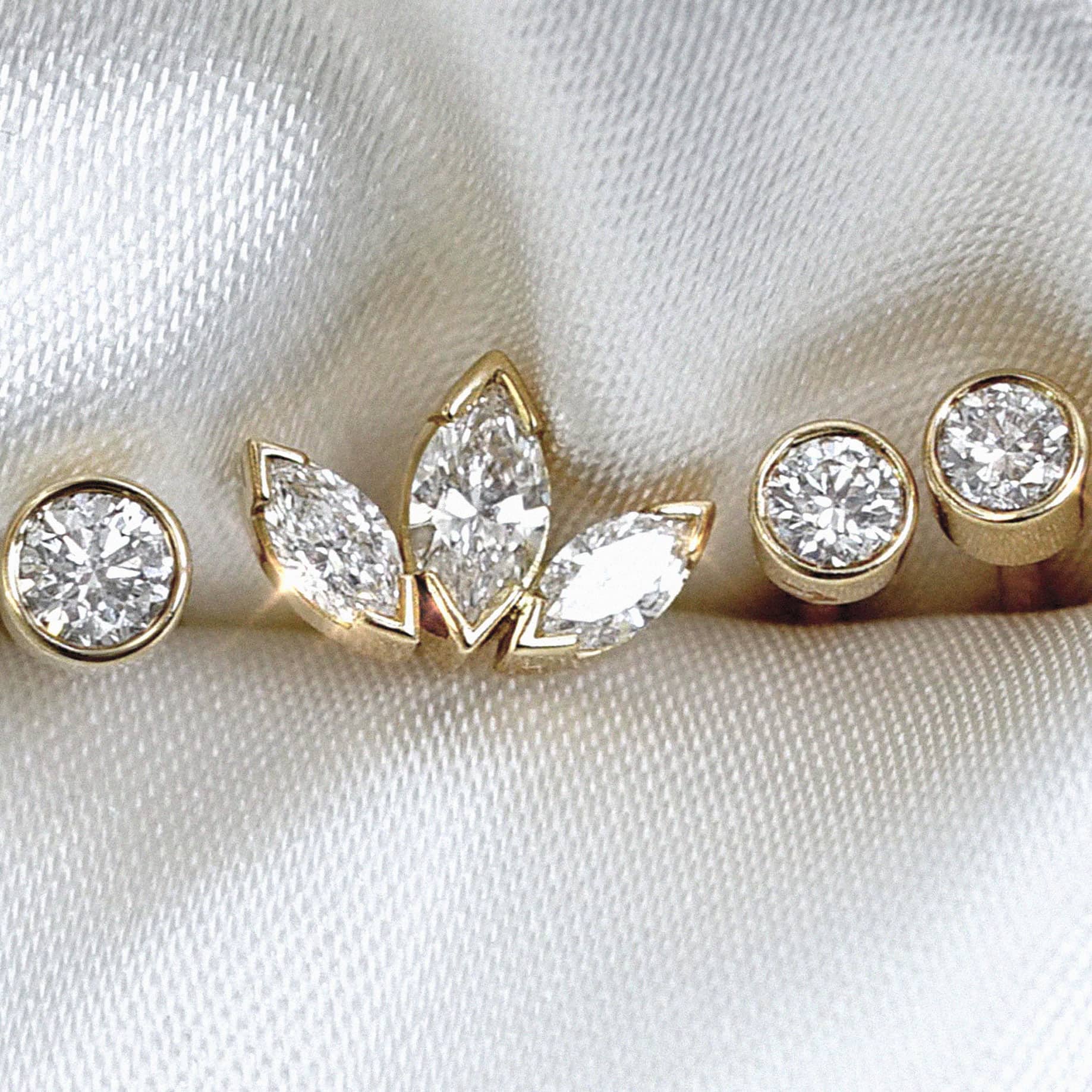
Natural diamonds can be sourced in round, oval, emerald, radiant, cushion, pear, marquise, princess and other shapes where appropriate. Significant stones can be supplied with relevant certification and documentation.
Fully bespoke Lena Cohen commissions generally begin from £3,000.
See the
Bespoke Fine Jewellery service
or contact the workshop directly to discuss a pair.
Buying Diamond Studs as a Gift
A gift enquiry does not need to begin with a complete diamond specification.
The occasion, approximate budget, preferred metal and photographs of jewellery she already wears are often enough to establish a direction. From there, Lena Cohen Jewellery can narrow the choice to a small number of natural-diamond options.
For more guidance on buying for a wife or partner, see
Jewellery Gifts for Her.
Lena Cohen Diamond Studs
Lena Cohen Jewellery works in solid 18ct gold and natural diamonds, with platinum available for selected made-to-order and bespoke work.
Jewellery is made in the UK through our London workshop and established specialist British jewellery trades where required. Appropriate UK hallmarking is applied in accordance with the relevant precious-metal rules.
For significant diamond pairs, the natural diamonds, measurements, grading information, metal and fitting details are agreed before production.
Further Reading on Diamond Quality & Hallmarking
Diamond Stud Earrings FAQ
Questions to Ask Before Choosing a Pair
What size diamond studs are best?
The right size depends on the visible presence you want and the proportions of the ear. Compare millimetre dimensions as well as carat weight, because diamonds with similar weights can face up differently.
What diamond shape is best for stud earrings?
Round brilliant gives a symmetrical outline and concentrated brilliance. Oval and marquise create more length, princess gives a square geometry, pear introduces asymmetry, and emerald or other step cuts show broader mirror-like facets.
How should two diamonds be matched for earrings?
Compare carat weight together with measurements, proportions, visible spread, colour and overall light performance. A successful pair should look balanced together on the ears.
What clarity is suitable for diamond studs?
The answer depends on the diamond shape and individual stone. Brilliant cuts can often accommodate a wider clarity range when inclusions are unobtrusive, while open step cuts tend to reveal clarity characteristics more readily.
Can diamond studs be made with a custom post length?
Yes. Selected Lena Cohen made-to-order and bespoke diamond studs can be produced with an adjusted post or barbell length where the design allows.
Can I commission a different diamond size from the pair shown?
Yes. Natural diamonds can be sourced around the preferred carat weight, face-up dimensions, colour, clarity, shape and budget for made-to-order or bespoke work.
Does Lena Cohen use natural diamonds?
Yes. Lena Cohen diamond jewellery uses natural diamonds and solid 18ct gold, with platinum available for selected made-to-order and bespoke commissions.
Lena Cohen Jewellery · London
Choose the diamond and the earring as one piece
The strongest pair comes from the relationship between the natural diamonds, their visible proportions, the setting and the way the finished earrings sit on the wearer.
You can begin with a classic round pair, an individual elongated shape, a preferred budget or simply the size you would like to see on the ear.