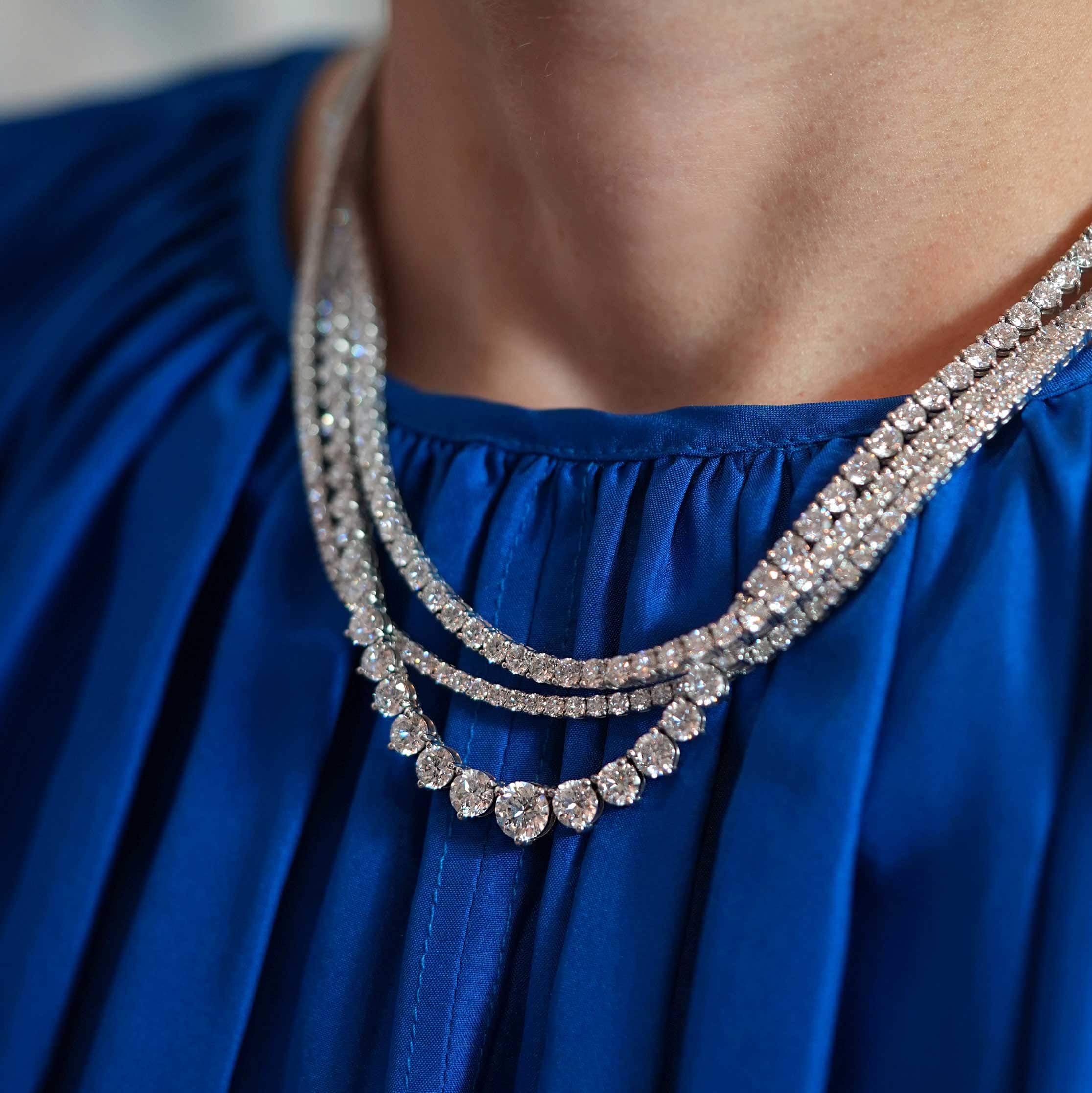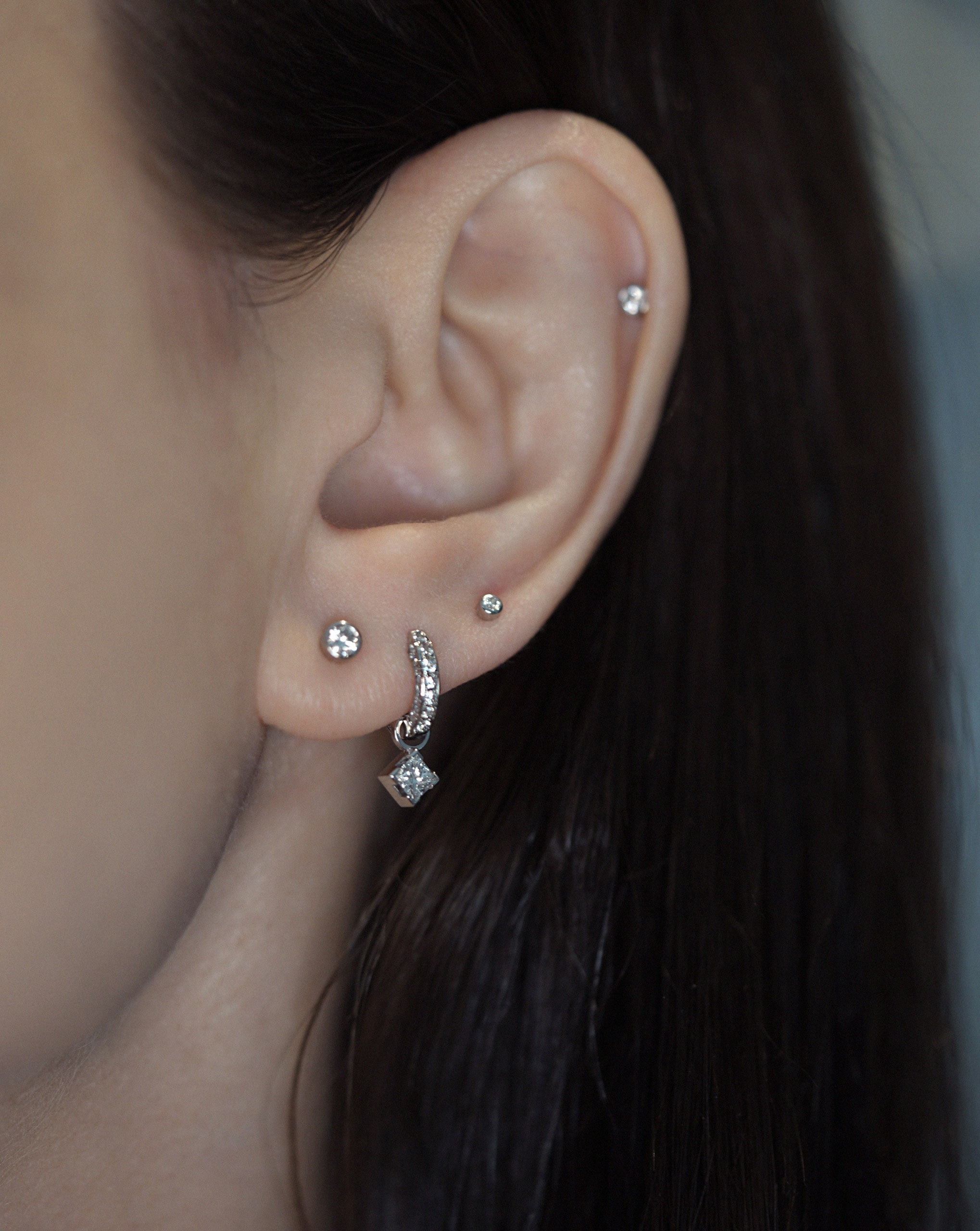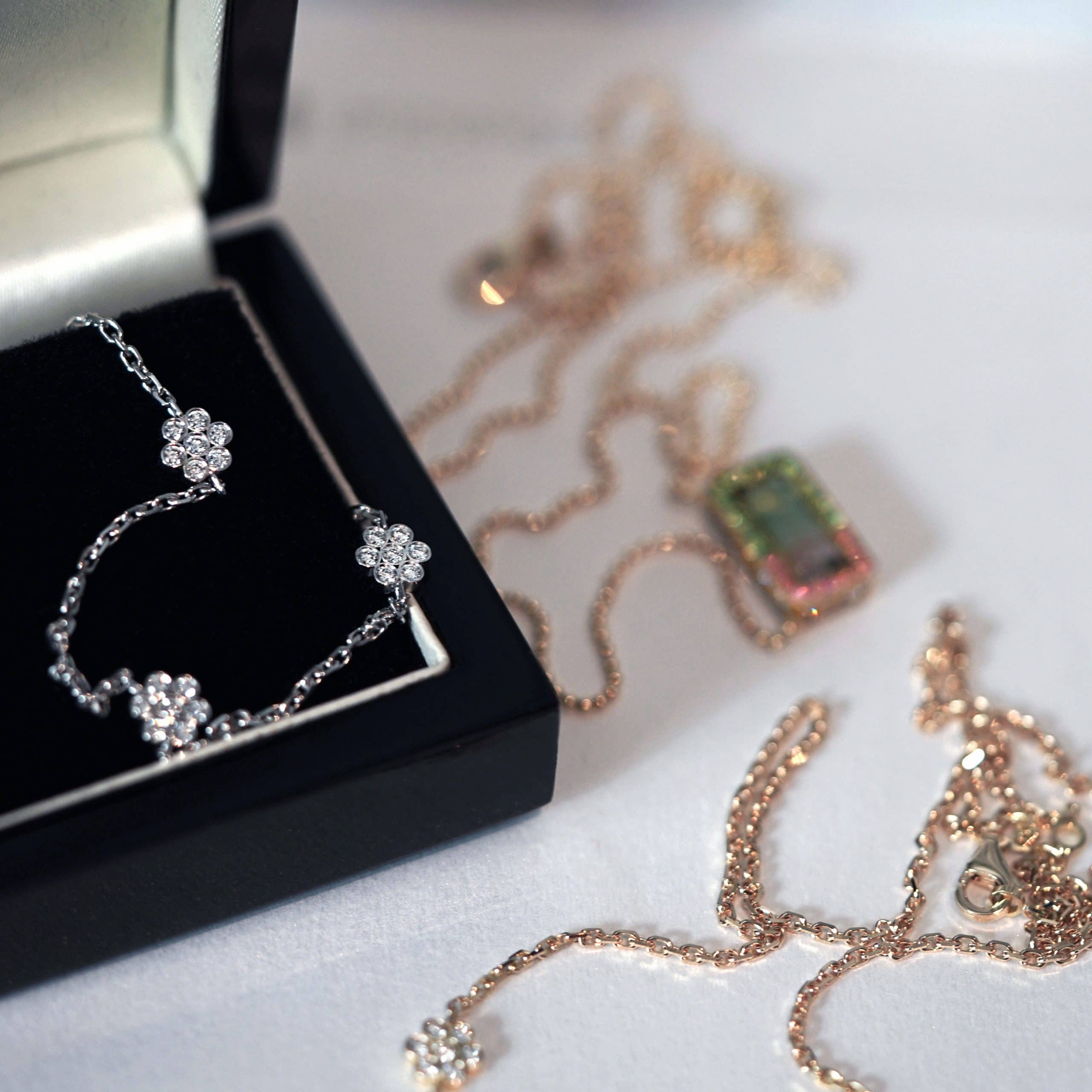
A new ear piercing is a healing wound, not simply a hole waiting for a prettier earring. The most useful aftercare is usually simple: keep your hands away unless you are cleaning it, use appropriate sterile saline rather than harsh products, avoid pressure and unnecessary movement, and do not rush to change the initial jewellery. At Lena Cohen Jewellery, our fine ear jewellery is designed for healed piercings, so this guide focuses first on getting the piercing properly through its healing stage — and only then on choosing the jewellery you want to wear long term.
What is the safest routine for a new ear piercing?
Wash your hands before touching the area, clean according to the instructions given by your professional piercer, avoid alcohol, hydrogen peroxide and aggressive antiseptics unless specifically advised, do not twist or play with the jewellery, minimise pressure and friction, and leave the initial jewellery in place during healing unless a qualified piercer or clinician tells you otherwise.
Jewellery chosen for a fresh piercing has a different job from jewellery chosen for a healed piercing. During healing, the material, dimensions, style and fit of the initial jewellery must support the healing tissue. Decorative choice comes later. Lena Cohen ear jewellery is intended for healed piercings unless a product page states otherwise.
Do not keep touching, twisting or checking the jewellery
One of the most common aftercare mistakes is simply interfering with the piercing too much. Every time you touch the area you introduce movement, friction and whatever is on your fingers.
Wash your hands thoroughly before any necessary contact. Outside cleaning, leave the piercing alone as much as possible.
Do not twist or rotate the jewellery simply because older piercing advice said you should. Movement is not required for cleaning and can irritate healing tissue.
Use sterile saline, not a chemistry experiment
For routine aftercare, a sterile saline wound wash containing 0.9% sodium chloride is a common professional recommendation. It gives you a predictable concentration without relying on homemade salt mixtures that can easily be too strong.
Avoid alcohol, hydrogen peroxide, iodine, strong antibacterial products and aggressive piercing solutions unless a medical professional has specifically advised their use. More powerful does not mean better: harsh products can irritate healing tissue.
Do not over-clean either. Repeated scrubbing and constant product application can become another source of irritation.
Clean does not mean scrubbed
After cleaning, dry the area gently rather than rubbing it with a bath towel. A clean disposable product such as gauze or another suitable single-use material reduces the chance of snagging the jewellery or transferring bacteria from a damp household towel.
If dried crust has formed, soften it rather than picking at it. Healing piercings often produce a small amount of pale fluid that dries around the jewellery.
The real problem is not hair itself — it is friction and product build-up
Long hair can repeatedly catch on fresh jewellery, especially around helix and upper-lobe piercings. That movement can irritate the channel even when the hair itself is clean.
Hairspray, dry shampoo, perfume, skincare, foundation and other beauty products should also be kept away from the healing area as much as practical.
You do not need to keep your hair tied back for an arbitrary number of weeks. The useful principle is simpler: avoid repeated snagging, pressure and product contamination while the piercing is healing.
Pressure can irritate a piercing even when everything is clean
Sleeping directly on a fresh cartilage piercing can create hours of pressure in exactly the same area. Headphones, helmets, phones and glasses can create similar repetitive contact depending on the placement.
If possible, sleep on the opposite side and pay attention to anything that presses repeatedly against the jewellery. Clean bedding also matters because the piercing remains in contact with the pillow for long periods.
Persistent irritation is not always an infection. Sometimes the piercing is simply being bumped or compressed every day before it has had a chance to settle.
Avoid unnecessary submersion while the piercing is healing
Pools, hot tubs, lakes and open water expose a healing piercing to environments you cannot control. Avoid unnecessary submersion during the healing period and follow the specific advice given by your piercer.
This is different from briefly getting the ear wet in a clean shower. The issue is prolonged or repeated exposure to shared or natural bodies of water while the piercing channel is still healing.
A piercing can look healed before the inside is ready
One of the most common mistakes is assuming that a piercing is fully healed because it no longer looks red or sore from the outside.
Piercing channels heal from the outside in. The surface can appear settled while the tissue deeper in the channel remains fragile.
Do not change the initial jewellery simply because a certain number of weeks has passed. Healing time varies by placement, anatomy and individual circumstances. Ask your professional piercer to confirm when your particular piercing is ready.
A healed piercing should no longer be tender, actively secreting or repeatedly crusting, and the minimum healing period for that placement should have passed.
If you are uncertain, ask your piercer before changing jewellery. It is better to wait than to restart irritation by changing too early.
Tenderness and crusting can be normal. Increasing heat, pain or pus is different.
During early healing, some tenderness, local swelling, itching and pale fluid that dries into a light crust can occur.
Seek medical advice if the area becomes increasingly swollen, painful, hot, very red or unusually dark, if pus or blood is coming from the piercing, or if you feel feverish, shivery or generally unwell.
If you suspect infection, do not automatically remove the jewellery yourself. Get advice from a clinician or professional piercer first.
This is when jewellery choice becomes more interesting
Once the piercing is genuinely healed, you can start choosing jewellery around comfort, proportion, gold colour, stone, fastening and the way you want the ear to look.
Lena Cohen ear jewellery is made in solid 18ct gold in London, with natural diamonds, pearls and selected gemstones across flat-back, screw-back, huggie and stud designs. Many pieces are available as singles as well as pairs, which makes them useful for helix, cartilage, second-lobe and asymmetric styling.
Healed does not mean every earring will fit every ear
Ear thickness, piercing angle and placement vary. A barbell that is unnecessarily long may move too much or project behind the ear, while one that is too short can feel tight.
Selected Lena Cohen piercing designs can be made with a different barbell or flat-back pin length when the correct measurement is supplied.
If comfort and fastening are your main concern, our
guide to secure earring backs
compares screw backs, flat backs and conventional butterfly backs.
Do not confuse plated fashion jewellery with solid gold
Once a piercing has healed, you have far more freedom to choose jewellery for style as well as fit. But the material description still matters.
“Gold colour”, gold plating, vermeil and solid 18ct gold are not the same product. A plated finish is a surface layer over another metal; solid 18ct gold is a gold alloy throughout the piece.
Our
guide to reading fine jewellery claims
explains what material descriptions should actually tell you before you buy.
Fine piercing jewellery for after the healing stage
Lena Cohen Jewellery is an independent, family-run London fine jewellery business. Our ear jewellery is made in solid 18ct gold with natural diamonds, pearls and selected natural gemstones, with flat-back and screw-back options across the collection.
We make our jewellery in the UK through our London workshop and specialist British jewellery trades where required, and we support questions about fit, post length, fastening and aftercare directly.
Read more about
why clients choose Lena Cohen Jewellery
and our approach as an
independent UK fine jewellery business.
Choose by fit first, then style
For styling several healed piercings together, see our
Curated Ear Ratio Guide.
For natural diamond studs, setting profiles and fastening options, read
How to Choose Diamond Stud Earrings.
If you want a specific gemstone, diamond size, proportion or fit that is not available ready-made, our
London bespoke jewellery service
can consider the complete piece rather than only the decorative front.
Common questions about healing a new ear piercing
Should I rotate my new piercing?
Routine twisting or rotating is not necessary for cleaning and may irritate the healing channel. Leave the jewellery alone except when necessary for appropriate aftercare.
What saline should I use?
A sterile saline wound wash with 0.9% sodium chloride and no unnecessary additives is a common professional recommendation. Follow any specific instructions given by your piercer or clinician.
Can I use alcohol or hydrogen peroxide?
Harsh antiseptics can irritate healing tissue and are not generally recommended for routine piercing aftercare unless specifically advised by a medical professional.
When can I change my piercing jewellery?
Do not rely on a fixed date alone. The minimum healing time should have passed and the piercing should no longer be tender, secreting or repeatedly crusting. Ask your professional piercer if you are unsure.
Can I sleep on a new cartilage piercing?
Repeated pressure can irritate a healing cartilage piercing. Where possible, avoid sleeping directly on the new piercing until it has settled.
How do I know if my piercing is infected?
Increasing pain, heat, swelling, pronounced redness or darkening, pus, bleeding or feeling feverish or generally unwell can be warning signs. Seek medical advice if you suspect infection.
Can I wear Lena Cohen jewellery in a new piercing?
Our ear jewellery is designed primarily for healed piercings. Keep the initial jewellery recommended by your professional piercer in place through healing unless they advise a change.
Heal first. Choose the jewellery you love afterwards.
A fresh piercing needs time, stability and sensible aftercare. Once it is properly healed, that is when fit, fastening, natural diamonds, gemstones and the overall ear composition can become the focus.

Lena Cohen Jewellery creates solid 18ct gold ear jewellery in London for healed piercings, including screw-back and flat-back studs, natural diamond earrings, huggies and pieces available as singles or pairs.