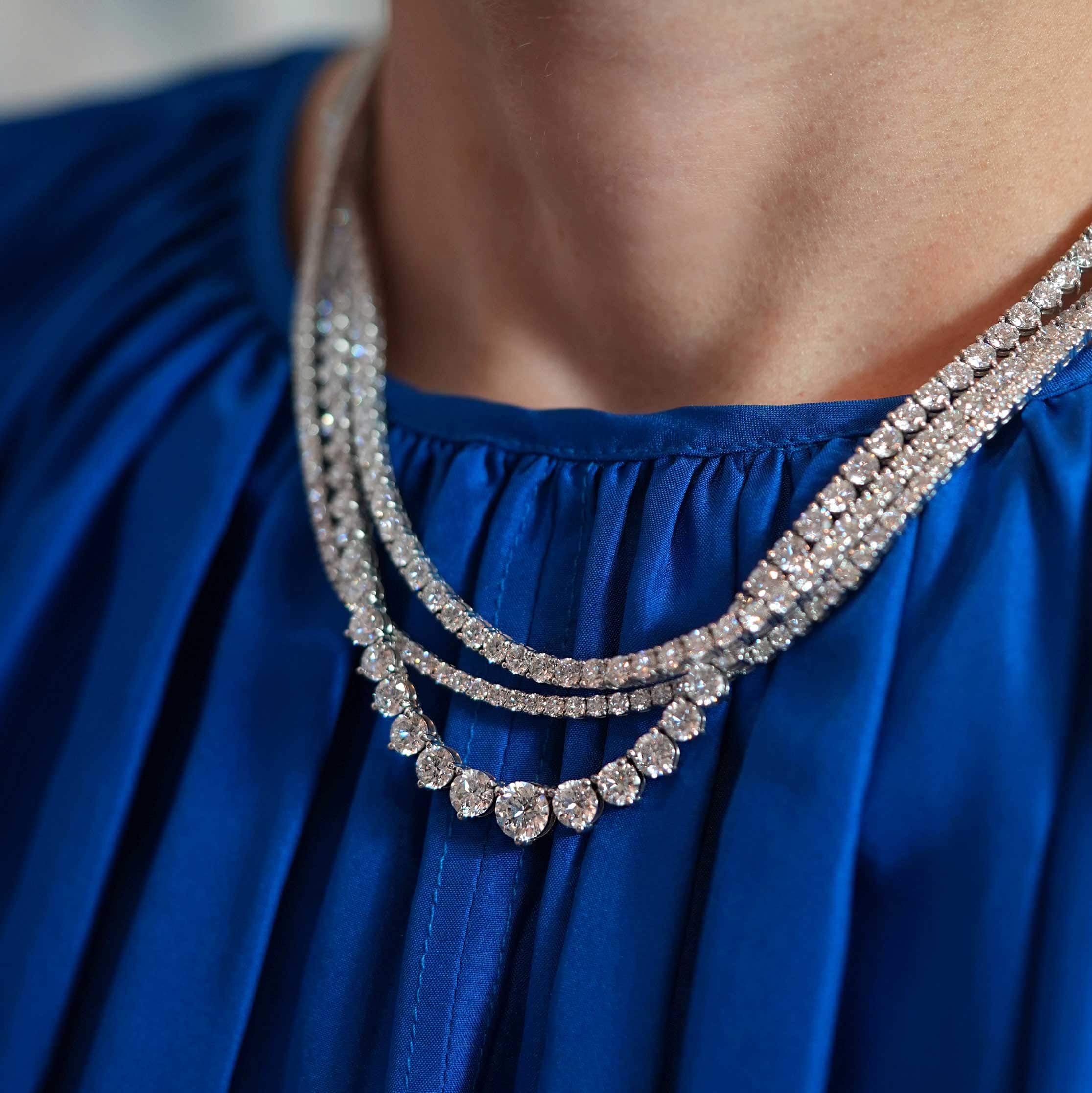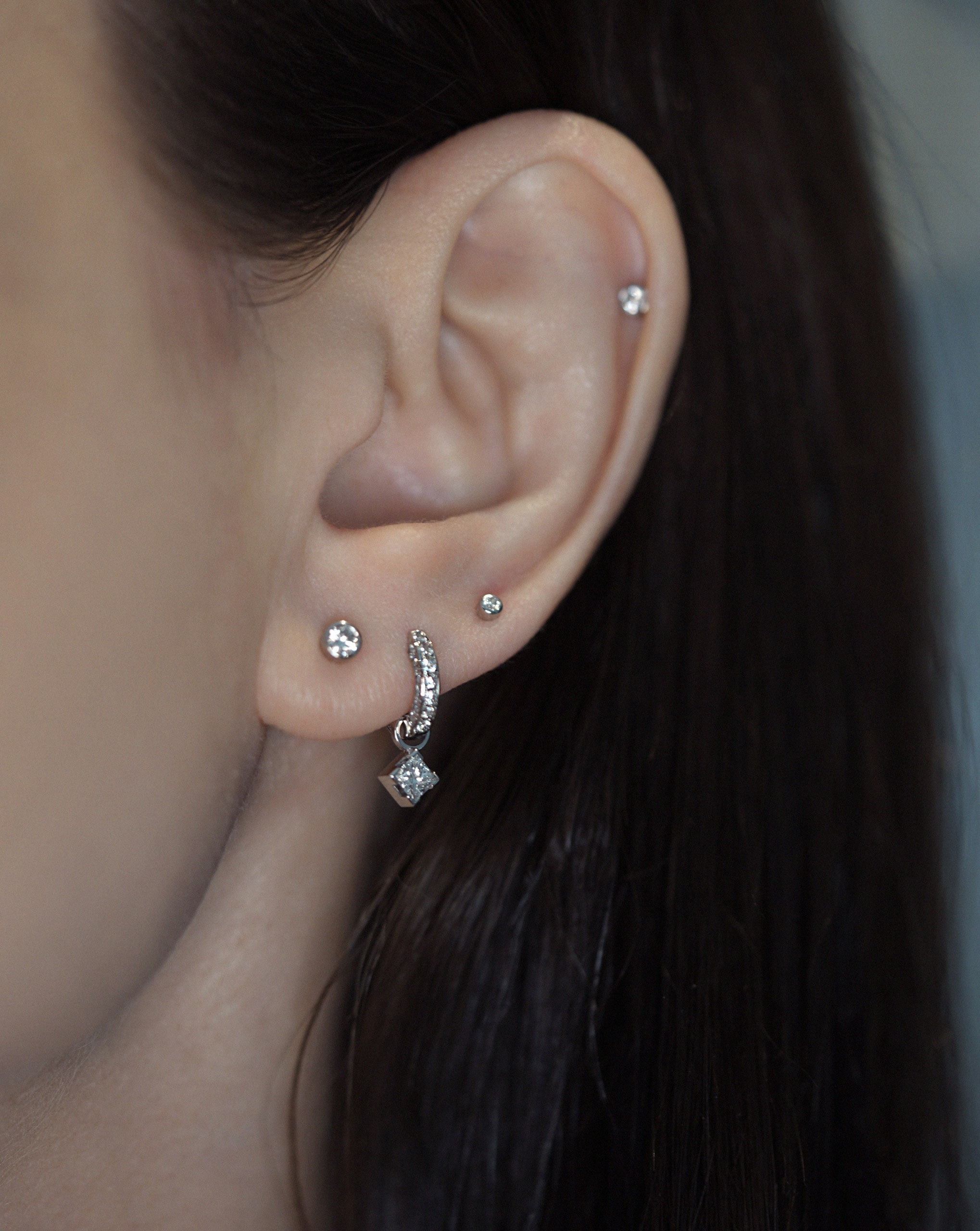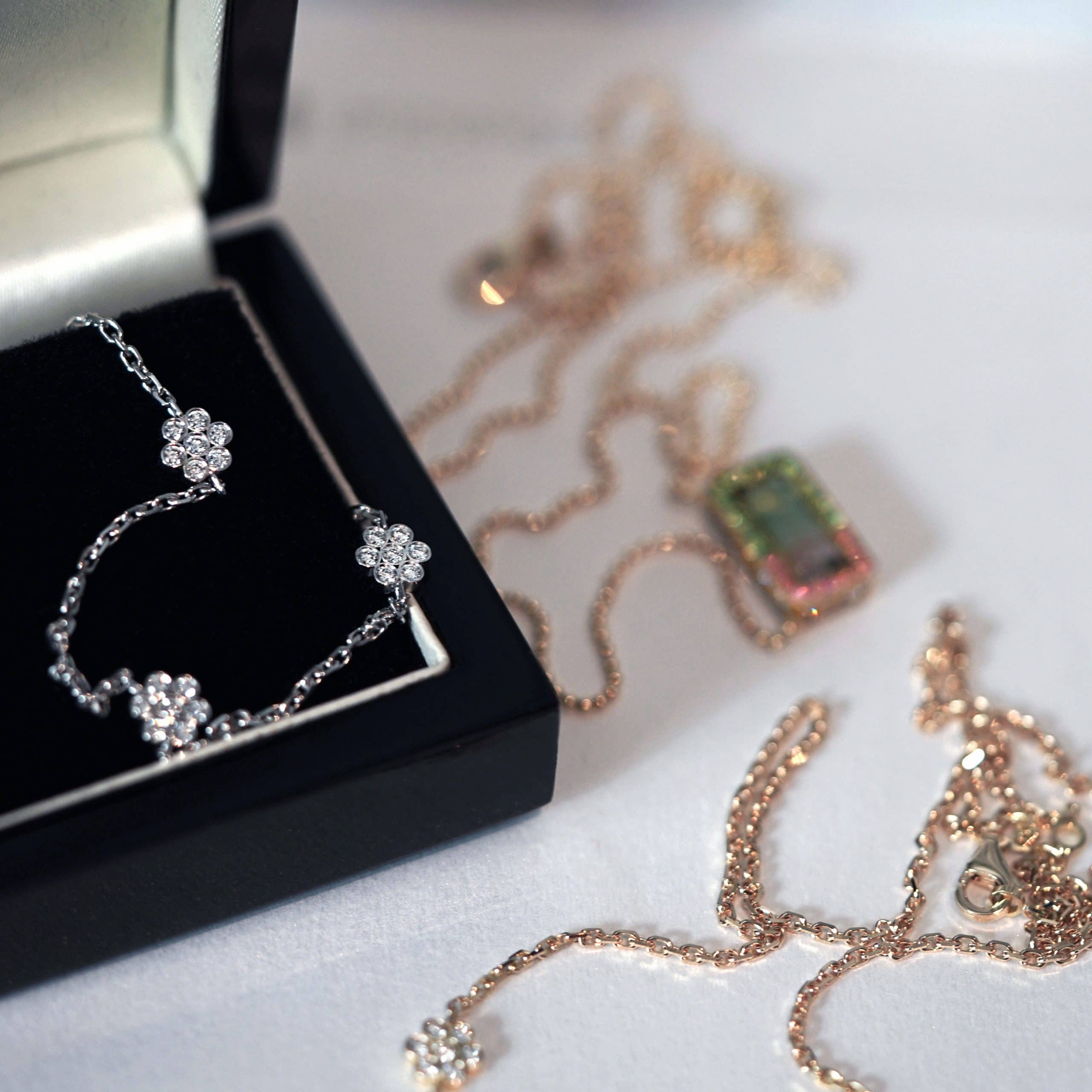
“High quality” is one of the easiest phrases to put on a jewellery website and one of the least useful unless the brand explains what it means. For cartilage earrings, quality should be visible in facts: the metal, the stones, the construction, the fastening, the fit, where the piece is made and what happens if you need help after buying it. Lena Cohen Jewellery creates solid 18ct gold ear jewellery in London for healed piercings, using natural diamonds, pearls and selected natural gemstones, with screw-back and flat-back options across the collection.

What makes a cartilage earring genuinely high quality?
Look beyond the front of the earring. A good fine-jewellery piece should tell you exactly what gold is used, whether the stones are natural or laboratory-grown, what fastening it has, what the post or barbell dimensions are, where it was made and whether the jeweller can support you if the standard fit is not right. “Luxury” is styling language. Those details are evidence.
Explore Lena Cohen solid 18ct gold cartilage and helix jewellery, including natural diamond studs, gemstone designs, flat backs, screw backs and pieces available individually as well as in pairs.
“Gold” is not a sufficient product description
If you are paying fine-jewellery prices, the product page should state clearly whether the piece is solid gold, plated, vermeil or another metal entirely.
Lena Cohen ear jewellery is made in solid 18ct gold rather than gold plating. In UK hallmarking language, 18ct gold has a fineness of 750 parts gold per thousand. Where the applicable UK weight threshold requires hallmarking, pieces are hallmarked accordingly.
If a jewellery page makes the material difficult to understand, our
guide to reading fine jewellery claims
explains the difference between solid gold, plating, hallmarking and vague marketing terminology.

A useful test of workmanship is sometimes the simplest piece. With no stones to distract the eye, proportion, polish, construction and fastening become more visible.
Natural diamond, laboratory-grown diamond and imitation stone are different products
Good jewellery descriptions should not make the buyer decode what the stone is. If an earring contains diamonds, the brand should be clear about whether those diamonds are natural or laboratory-grown.
Lena Cohen Jewellery works with natural diamonds and selected natural gemstones. On individual product pages, the relevant stone information, available sizes and construction details are stated with the piece.
The point is not that every high-quality cartilage earring needs a diamond. It is that the buyer should know exactly what has been used.
Small jewellery leaves very little room for poor construction
Cartilage jewellery is compact. That makes proportion especially important because the metal, stones and fastening all have to work within a very small object.

Look at how the stones sit in relation to the gold. Is the setting neat? Does the design read clearly at its actual size? Does the construction make sense from the back as well as the front?
The
Diamond Lotus Piercing Stud
uses three marquise-shaped natural diamonds to form a compact flower in solid 18ct gold. It is available in more than one size and can be ordered as a single or pair, with a flower screw back and an optional pyramid-back alternative.
A beautiful earring that never sits properly is not a successful purchase
Ear anatomy varies. Even with fully healed piercings, one standard post or barbell length will not feel identical on every person.

Too much unused length can allow an earring to move or project further behind the ear than necessary. A length that is too short can simply be the wrong fit. That is why it is useful when a jeweller can tell you the actual dimensions rather than only describing an earring as “comfortable”.
Selected Lena Cohen screw-back designs use a 6 mm barbell as standard and can be made longer or shorter when the correct measurement is supplied. The individual product page explains where this option is available.
The back is part of the jewellery too
Most product photography naturally concentrates on the decorative front. But for a piece worn in a healed helix or cartilage placement, the post and fastening can be just as important to daily use.

A screw back and a flat back solve different problems. One uses a threaded connection; the other keeps the rear profile low. Neither should be treated as a universal answer for every ear.
If you want the construction explained properly, see our
guide to screw backs, flat backs and earring fit.
If you prefer a low-profile back rather than a threaded screw fastening, look for a design that was built around that system rather than treating the backing as an afterthought.

The
Trio Diamond Climber Stud
is made in solid 18ct gold with natural diamonds and a press-fit flat-back system, with the graduated diamonds arranged in a slight curve to follow the ear.
Designed in Britain and made in Britain are not the same claim
The location of a brand’s website, office or designer does not automatically tell you where the jewellery itself was made.

Lena Cohen Jewellery is made through our London workshop and specialist British jewellery trades where a design requires them. We use “made in London” to describe the making of the piece rather than simply the location of the brand.
If UK making matters to you, this distinction is worth checking with any brand before buying.
Quality also includes what happens before and after checkout
A piece of fine jewellery is not only its gold and diamonds. There is also the relationship with the business selling it. Can somebody tell you the post length? Can you ask whether another backing is possible? Can the team explain the stone, the construction or a made-to-order variation without reading the same product description back to you?

This is where a strong independent jeweller can be different from an anonymous retail chain. The point is not that small automatically means better. It is that the business should remain close enough to the product to answer real questions about it.
Our guide to
independent fine jewellery in the UK
sets out the checks we think buyers should make with any jewellery brand: metal clarity, stone language, genuine production information, hallmarking, access to the people behind the piece and practical after-sales support.
The more specific the jewellery, the more useful direct support becomes
Fine ear jewellery has details that ordinary accessory shopping often does not: single or pair, yellow or white gold, post length, flat back or screw back, stone choice, dimensions, placement and sometimes made-to-order options.
At Lena Cohen, product questions are handled directly by a small team that knows the jewellery rather than being separated into an anonymous customer-service chain.
That matters most when a standard product is almost right but one practical detail needs discussing before the order is placed.
Choosing fine jewellery does not mean every cartilage earring has to become a tiny round solitaire. Construction and material quality can sit behind a more distinctive shape.

The
Bow Diamond Helix Stud
combines solid 18ct gold, natural diamonds and a pyramid screw back in a curved graphic design, available in yellow or white gold.
Do not pay for two pieces when your ear needs one
Cartilage jewellery exposes one of the limitations of traditional earring retail: earrings are often automatically sold as pairs even when the wearer wants one specific piece for one specific placement.

Many Lena Cohen designs are available as singles. Other designs are intentionally single pieces. That allows the purchase to follow the ear rather than an old retail convention.
The
Diamond Helix Crescent Stud,
for example, is sold as a single piece and can be ordered with natural diamonds, emeralds or sapphires depending on the selected version.
Quality is in the execution, not the amount of decoration
A tiny plain-gold disc can be beautifully made. A diamond-covered piece can be beautifully made. Neither becomes better jewellery simply because it is minimal or more expensive.
Judge the object on specific things: material, stone disclosure, setting, proportions, fastening, polish, fit, production and service.
Style comes after that. Quality should survive whichever aesthetic you prefer.
If floral or curved diamond designs are not your style, cartilage fine jewellery can be much more architectural.

The
Diamond Medal Piercing Stud
uses a clean solid-gold form with a natural diamond, a pyramid screw back and a standard 6 mm barbell, with yellow and white gold options.
A useful quality checklist
Metal: Does the page state the exact metal and fineness?
Stones: Does it clearly tell you whether diamonds and gemstones are natural, laboratory-grown or simulated?
Construction: Can you see or understand how the earring fastens?
Dimensions: Is the post or barbell length stated where it matters?
Making: Does the brand say where the jewellery itself is made rather than only where it was designed?
Hallmarking: Are UK hallmarking claims clear where applicable?
Choice: Can you buy a single if you only need one?
Service: Can you reach someone who actually knows the piece if you have a product or fit question?
What “quality” means when we use the word
Lena Cohen Jewellery is an independent, family-run London fine jewellery business. We work in solid 18ct gold with natural diamonds, pearls and selected natural gemstones, making jewellery in the UK through our London workshop and specialist British jewellery trades where required.

For us, quality also means being able to explain the object: what it is made from, how it fastens, what dimensions are available, what can be altered and what cannot. Product questions and practical support remain with the small business responsible for selling the jewellery.
You can read more about
why clients choose Lena Cohen Jewellery
and our approach as an
independent UK fine jewellery brand.
What to check before buying fine ear jewellery
What are high-quality cartilage earrings made from?
There is no single material that defines quality, but a fine-jewellery product should state its metal precisely. Lena Cohen cartilage and helix jewellery is made in solid 18ct gold rather than gold plating or vermeil.
Are Lena Cohen diamonds natural?
Yes. Lena Cohen Jewellery works with natural diamonds rather than laboratory-grown diamonds. Individual product pages give the relevant stone information for each design.
Are Lena Cohen cartilage earrings made in the UK?
Yes. Lena Cohen jewellery is made in London through the workshop and specialist London jewellery trades where a particular design requires them.
Can I buy one cartilage earring instead of a pair?
Yes. Many Lena Cohen designs are available as singles as well as pairs, and some helix pieces are intentionally sold as individual earrings.
Can the barbell length be changed?
On selected Lena Cohen screw-back designs, yes. The standard barbell is often 6 mm, and another length can be made when the correct measurement is supplied. Check the individual product page before ordering.
Are screw backs or flat backs better?
They are different constructions rather than quality grades. Screw backs use a threaded connection; flat backs provide a lower-profile rear surface. The better choice depends on the design, placement and preferred fit.
Does Lena Cohen provide piercing services?
No. Lena Cohen Jewellery is a fine jewellery business rather than a piercing studio. Our cartilage and helix jewellery is designed primarily for fully healed piercings.
High-quality jewellery should be able to explain itself
Look past words such as luxury, premium and high quality. Check the gold. Check the stones. Look at the back. Read the dimensions. Find out where the piece was made. Then see whether the business can answer a sensible question about what it sells.
Lena Cohen creates solid 18ct gold cartilage and helix jewellery for healed piercings in London, with natural diamonds and gemstones, direct product support and selected made-to-order fit options.