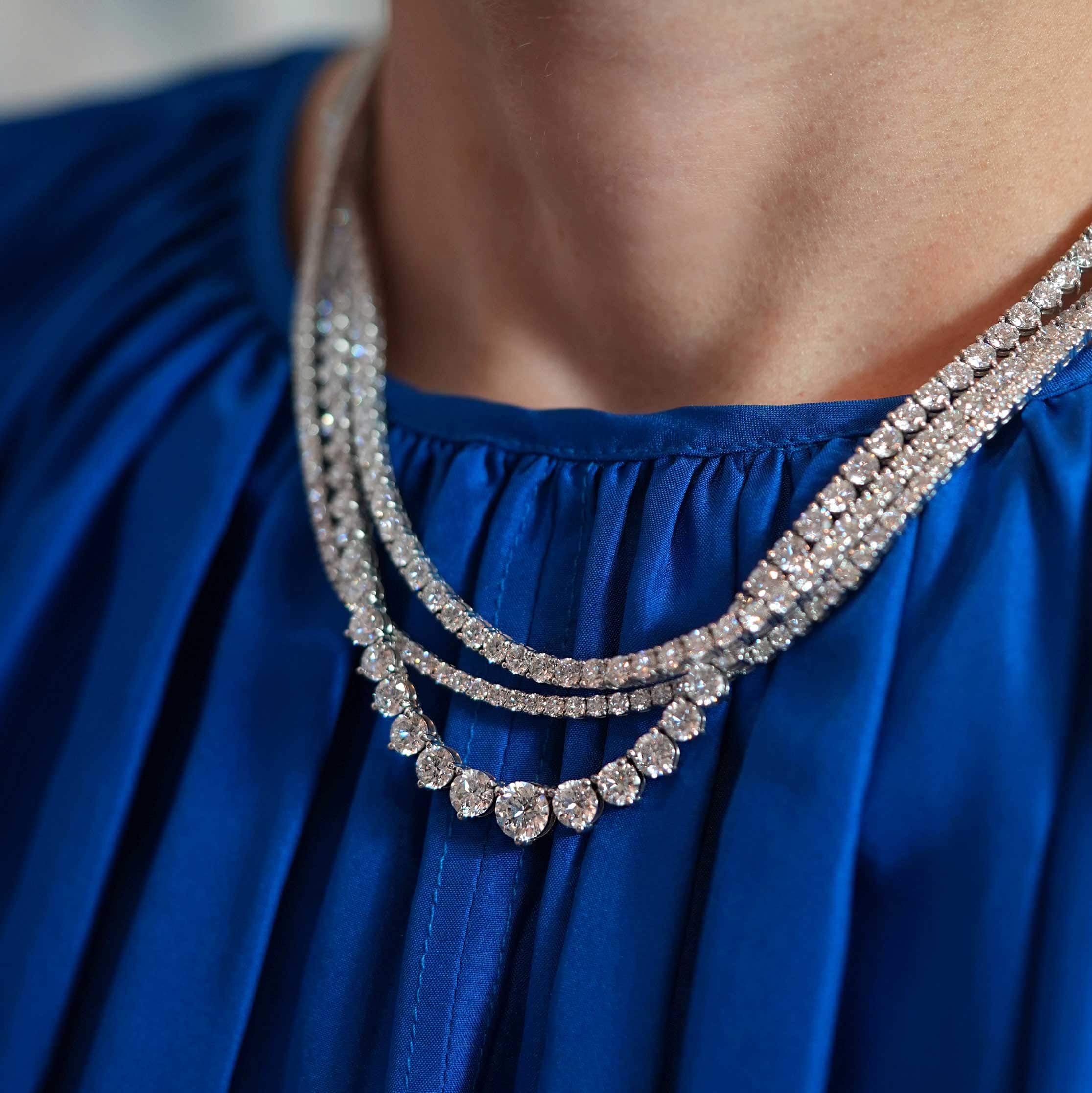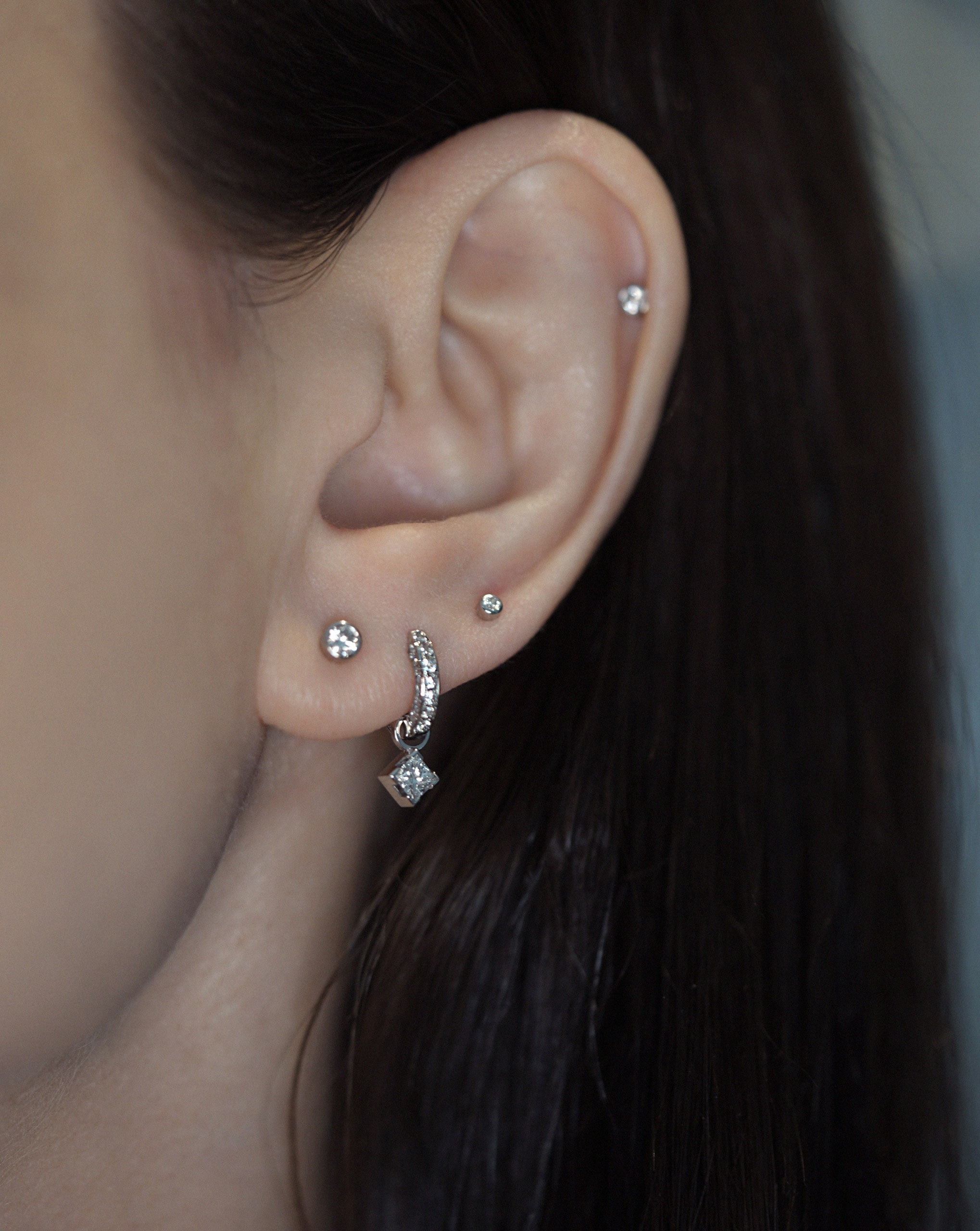
Gold karat tells you how much pure gold is present in a gold alloy. 9ct gold contains 37.5% pure gold, 14ct contains 58.5%, 18ct contains 75%, and 22ct contains 91.6%. Higher karat does not automatically mean that a finished piece is too soft to wear, while lower karat does not automatically make jewellery more durable. Alloy composition, thickness, setting, construction and how the jewellery is worn all matter.
Should you buy 9ct or 18ct gold?
Both are real gold alloys in the UK. The difference is substantial: 9ct contains 37.5% pure gold while 18ct contains 75%. If the priority is lower price and a harder gold alloy, 9ct can make sense. If the priority is higher gold content, richer yellow-gold colour, lower proportion of other alloy metals and traditional fine-jewellery quality, 18ct is usually the more appropriate choice. For everyday jewellery, however, design and construction matter just as much as the karat number.

What do 9ct, 14ct, 18ct, 22ct and 24ct gold actually mean?
Karat or carat describes the proportion of pure gold in the alloy, measured against 24 parts. The remaining proportion is made from other metals chosen to alter colour, hardness, working properties and finish.
| Gold fineness | Pure gold | UK fineness mark | Typical context |
|---|---|---|---|
| 9ct gold | 37.5% | 375 | Accessible solid-gold jewellery and everyday pieces. |
| 14ct gold | 58.5% | 585 | Common internationally and available in the UK, sitting between 9ct and 18ct in gold content. |
| 18ct gold | 75% | 750 | Fine jewellery, diamond jewellery, engagement rings and long-term pieces. |
| 22ct gold | 91.6% | 916 | Very high-gold jewellery, often with a distinctly rich yellow colour. |
| 24ct gold | Approximately 99%+ | 990 / 999 | Near-pure gold; highly distinctive but less commonly used for delicate Western fine-jewellery settings. |

Is 9ct gold real gold?
Yes. In the UK, 9ct gold is a recognised gold fineness containing at least 375 parts pure gold per thousand parts of alloy.
Calling it “not real gold” is inaccurate. What is accurate is that most of a 9ct alloy is not pure gold: 62.5% consists of other alloying metals. In 18ct gold, only 25% is made up of those additional metals.
That distinction matters when comparing colour, price, material value, tarnish behaviour and the type of jewellery you want to own. It does not turn one material into “real gold” and the other into “fake gold”.
Karat, carat and ct: what is the difference?
In British jewellery, carat and the abbreviation ct are commonly used for gold purity: 9ct gold, 18ct gold and 22ct gold. In US usage, karat and K are more common for gold, such as 18K.
Carat is also the unit used for gemstone weight. Context therefore matters. 18ct gold describes the metal alloy, while a 1.00 carat diamond describes the weight of the diamond.

Is 9ct gold more durable than 18ct gold?
This is where very simple internet advice becomes misleading. Lower-karat gold alloys can be harder than higher-karat alloys, but hardness is only one material property. It does not by itself tell you how well an entire ring, clasp, chain or stone setting will survive years of wear.
The actual alloy recipe matters. So do band thickness, setting height, solder joins, chain construction, hinge design and how the piece is used. Two 18ct rings can perform very differently if one is properly proportioned and the other has been made unnecessarily thin.

This is why we would not choose a metal for an everyday ring by asking only, “Which karat is hardest?”
Our
Everyday Rings
are made in solid 18k gold using slim but considered proportions and low-profile settings, because everyday durability comes from the complete design rather than simply reducing the percentage of gold.
Is 18ct gold too soft for everyday wear?
No, not as a general rule. 18ct gold is widely used for engagement rings, wedding rings and fine jewellery intended for regular wear. It will develop surface marks, particularly on rings, but normal wear is different from structural failure. If a design is extremely thin, poorly supported or repeatedly exposed to heavy impact, changing the karat alone does not solve the design problem.
A harder gold alloy cannot make a delicate gemstone indestructible
When people ask which gold is “best for everyday wear”, the stone is sometimes ignored completely. That can be a bigger mistake than choosing between 9ct and 18ct.

Diamond, sapphire, emerald, opal and pearl do not behave alike. Hardness, toughness, cleavage, treatments and setting style all affect how practical the finished jewellery will be.
Before choosing an everyday gemstone ring, read our
Gemstone Durability Guide
which explains hardness, toughness and stability separately.
Does 18ct gold always look more yellow than 9ct gold?
18ct yellow gold usually has a richer natural gold colour because three quarters of the alloy is pure gold. But karat is not the only thing controlling shade. The particular metals used in the remaining alloy also change the finished colour.
Gold colour remains visible
Higher gold content usually produces a richer yellow appearance, but silver, copper and other alloying choices can make two pieces of the same karat look slightly different.
Copper changes the tone
Rose colour comes largely from copper in the alloy. The exact shade can therefore vary between karats and between manufacturers rather than following one universal pink colour.
White gold is still a gold alloy
Its pale colour comes from the alloy composition. Some white-gold jewellery is also rhodium plated for a brighter white finish, while other pieces use a different finish or alloy. Ask rather than assuming every white-gold piece is constructed identically.
Gold colour can change the character of the same diamond design
Metal selection is not only technical. Yellow gold gives a diamond ring warmth and visible contrast. White gold produces a cooler, quieter frame around a colourless diamond. Rose gold changes the overall temperature again.
Our
Round Brilliant Solitaire Engagement Ring
is made to order in 18ct gold or platinum, so metal, diamond, setting height and band proportions can be considered together rather than treating metal choice as a separate tick box.

Can 9ct gold tarnish or leave a dark mark on skin?
It can. Pure gold is highly resistant to corrosion, but 9ct jewellery contains a much larger proportion of other metals than 18ct jewellery. Those alloying metals can react with moisture, cosmetics, chemicals, skin chemistry or the environment.
A dark or greenish mark does not automatically prove that a piece is fake or plated. Equally, you should not assume every dramatic colour change is normal simply because the item is stamped 375. If something looks wrong, have the piece and its marks checked properly.
For cleaning, swimming, storage, chlorine and everyday wear, see our
Fine Jewellery Care Guide
Is higher-karat gold always better for sensitive skin?
Higher-karat gold contains a larger proportion of pure gold and therefore a smaller proportion of other alloying metals. But that does not make every 18ct alloy automatically suitable for every person.

If you already know that you react to a particular metal, the useful question is not simply “Is this 18ct?” but “What is the actual alloy?” White, yellow and rose gold may use different alloy systems.
Material descriptions should give you enough information to ask sensible questions. Our guide to
reading fine jewellery claims
explains why exact metal descriptions are more useful than vague terms such as “premium gold” or “luxury finish”.

“18k gold” and “18k gold plated” do not describe the same material
This is one of the most important distinctions when shopping online.
Solid 18ct gold means that the gold alloy forming the jewellery itself contains 75% pure gold. 18ct gold plated describes the fineness of a thin gold surface applied over another underlying material. It does not mean that the complete object contains 75% gold.
The same distinction applies to terms such as gold vermeil, gold filled and gold plated. They can all have legitimate uses, but they are not interchangeable with solid gold.
For pieces made specifically in 18k solid gold, see our
18K Solid Gold Jewellery
guide and collection.
What do 375, 585 and 750 mean on gold jewellery?
These are millesimal fineness numbers. They describe how many parts out of one thousand are pure gold:
For gold items above the UK exemption weight, a proper hallmark contains more information than the fineness number alone. It also includes a sponsor’s or maker’s mark and the mark of the Assay Office that tested the article.
Gold articles below 1 gram can fall within the UK weight exemption, so the absence of a hallmark on an extremely light piece does not by itself prove that the item is not gold.
For the legal UK rules, see the
British Hallmarking Council guidance
Can you wear 9ct and 18ct gold together?
Visually, yes. There is no rule saying jewellery of different gold finenesses cannot be worn in the same look.
Physical contact is a separate question. Rings worn tightly against one another rub every time the hand moves. Different alloys can have different hardness and wear characteristics, but even two rings made from the same karat can gradually wear each other’s claws, edges or pavé settings if their shapes make contact in the wrong place.
For an important engagement and wedding-ring stack, check where the pieces touch rather than relying on karat alone. A diamond edge rubbing directly against another ring’s claw is a more immediate problem than whether one band says 375 and the other 750.
Our
Hand Jewellery
and
Everyday Rings
pages show how proportion and profile affect the way rings sit and stack.

Which gold karat makes sense for different types of jewellery?
There is no universal answer for every piece. The way jewellery is constructed and worn should influence the decision.
| Jewellery | What matters most | Useful way to decide |
|---|---|---|
| Everyday ring | Band dimensions, setting, hand use, alloy and finish. | Do not automatically reject 18ct as “too soft”. Judge the complete construction. |
| Engagement ring | Setting security, diamond protection, wedding-band compatibility and servicing. | 18ct gold and platinum are established fine-jewellery choices. Design around the actual stone and wearer. |
| Fine necklace | Chain gauge, links, clasp, pendant weight and how often it is worn. | A higher gold content does not compensate for an under-built chain. |
| Diamond earrings | Setting, post, backing, weight and skin contact. | Use clear metal specifications and choose the construction around comfort and security. |
| Trend-led jewellery | Budget and expected length of ownership. | 9ct can be a rational solid-gold choice when higher gold content is not the priority. |
| Sentimental / heirloom piece | Material quality, repairability, construction and long-term ownership. | Higher gold content may be desirable, but choose a jeweller who can also maintain the piece. |
For a necklace, chain construction can matter more than people expect
A necklace does not experience the same forces as a ring. Instead, the weak points are more likely to be fine links, jump rings, the bail, clasp or the relationship between the weight of the pendant and the chain supporting it.
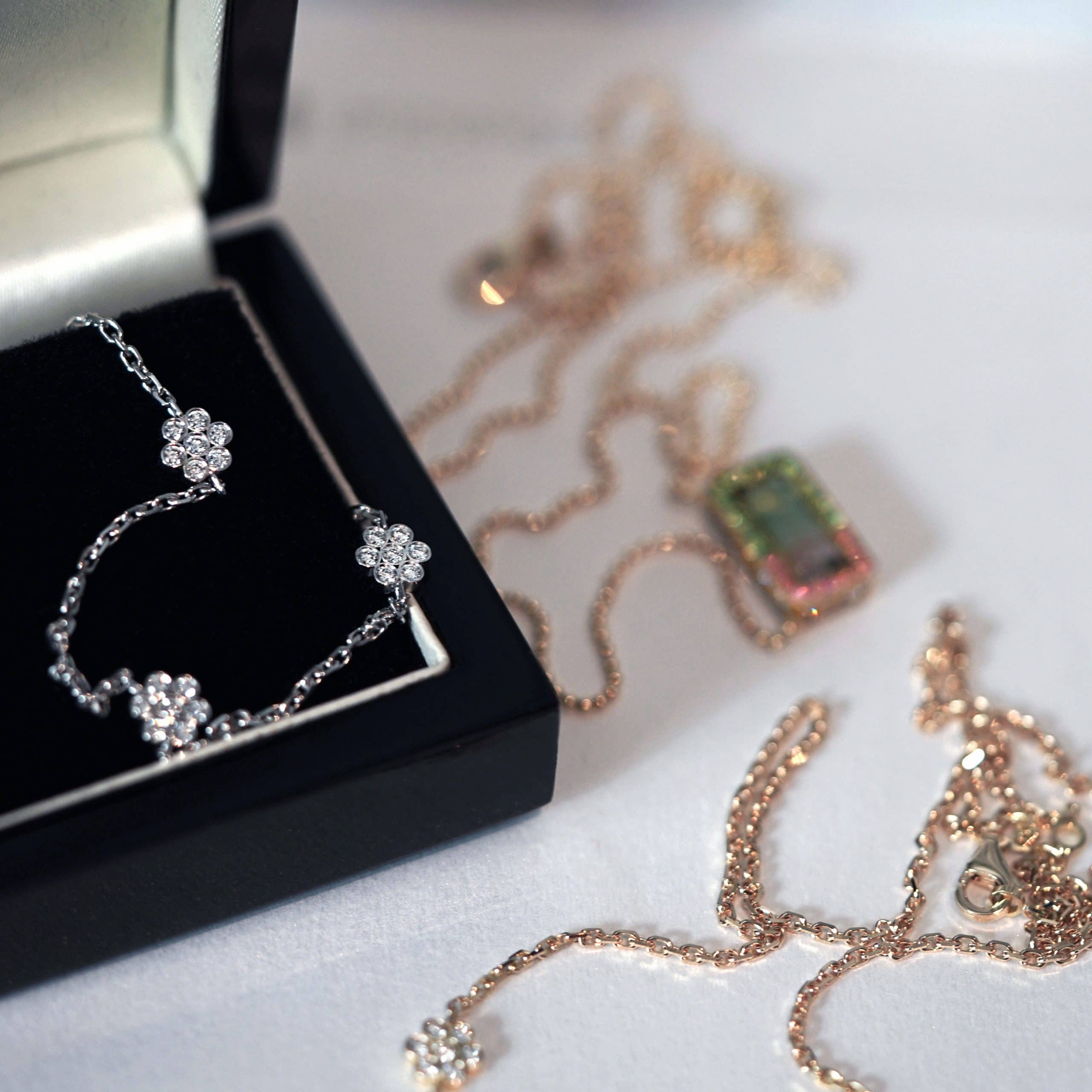
Our
18ct Gold Necklaces Guide
compares real pieces by chain, gemstone, scale and the way each design is worn rather than treating “18ct gold necklace” as one generic object.
Does 18ct gold hold more intrinsic gold value than 9ct?
Gram for gram, an 18ct alloy contains twice as much pure gold as a 9ct alloy: 75% rather than 37.5%. That gives the material itself a higher intrinsic gold content.
But a finished piece of jewellery should not be confused with a gold bar. Retail price can also include diamonds or gemstones, design, specialist setting, casting, fabrication, finishing, hallmarking, labour and the commercial costs of making and supporting the piece.

Buy fine jewellery because you want the object, the materials and the workmanship. Do not assume that the retail price of a designed piece will track its scrap-gold value.
A 750 stamp cannot tell you whether the jewellery was well made
Fineness tells you something important about the metal. It does not tell you whether the band is sensibly proportioned, a clasp is reliable, a diamond is properly set or the piece was designed with repair and long-term use in mind.
Two rings can both be hallmarked 750 and still be very different objects.
If this part of jewellery buying interests you, our guide to
independent fine jewellery brands that stay close to the making process
looks at craftsmanship, material clarity, repairability and accountability beyond the marketing language.
Why we work in 18k solid gold
At Lena Cohen Jewellery, our gold jewellery is made in solid 18k gold rather than gold plate or vermeil. We use it because 75% gold content gives us the material standard, colour and fine-jewellery character we want for pieces made with natural diamonds and gemstones.
That does not mean every person must buy 18ct or that 9ct has no valid use. It means a brand should be clear about the material it chooses and why.
Our current collections include 18k gold ear jewellery, necklaces, everyday rings, bracelets, engagement rings and bespoke pieces, made through our London jewellery business.
Questions people actually ask about 9ct and 18ct gold
Is 9ct gold fake gold?
No. 9ct gold is a recognised gold alloy in the UK containing 37.5% pure gold. Its standard fineness mark is 375.
Is 18ct gold too soft for an engagement ring?
No. 18ct gold is an established material for engagement and wedding jewellery. The durability of a ring also depends on the exact alloy, band dimensions, setting, stone protection and how the ring is worn.
Why is 18ct gold more expensive than 9ct gold?
The alloy contains twice the proportion of pure gold: 75% rather than 37.5%. The final jewellery price can also reflect weight, design, stones, workmanship and other production costs.
Does 9ct gold tarnish?
It can change appearance because 62.5% of the alloy consists of metals other than pure gold. The degree of discolouration depends on the alloy composition, environment, cosmetics, chemicals and wear.
What does 750 mean inside a ring?
750 is the millesimal fineness mark for 18ct gold. It means at least 750 parts out of 1,000 are pure gold.
What does 375 mean inside a ring?
375 is the millesimal fineness mark for 9ct gold, meaning the alloy contains 37.5% pure gold.
Is 14ct gold available in the UK?
Yes. 14ct gold is a recognised UK fineness with the 585 standard mark, although 9ct and 18ct are particularly familiar choices in the British jewellery market.
Does white gold always need rhodium plating?
Not every white-gold alloy and finish is identical. Many white-gold pieces are rhodium plated to produce a brighter white surface, while others may be finished differently. Ask the jeweller how the specific piece is made and what future maintenance it may need.
Can I stack 9ct and 18ct rings together?
Yes aesthetically, but rings that touch continuously will wear against one another. For valuable or sentimental rings, check where the settings and edges make contact rather than assuming the karat number alone predicts the wear.
Which gold does Lena Cohen Jewellery use?
We work in solid 18k gold for our gold jewellery. We do not describe gold-plated or vermeil jewellery as solid gold.
Related fine jewellery guides
18K Solid Gold Jewellery
Our dedicated guide and collection for jewellery made in solid 18k gold with natural diamonds and gemstones.
Fine Jewellery Care
Swimming, gym wear, cleaning, ultrasonic machines, storage, repairs and how to recognise actual damage.
Gemstone Durability for Everyday Jewellery
Why hardness and stability are different and why gold choice alone cannot make every gemstone suitable for daily wear.
Know the metal, then judge the jewellery
Gold fineness is an important specification, but it is only one part of a good piece of jewellery. Construction, stone setting, dimensions, fit, finishing, hallmarking and the ability to maintain the piece later all matter.
Lena Cohen Jewellery creates fine jewellery in solid 18k gold with natural diamonds and gemstones through our family-run London jewellery business.