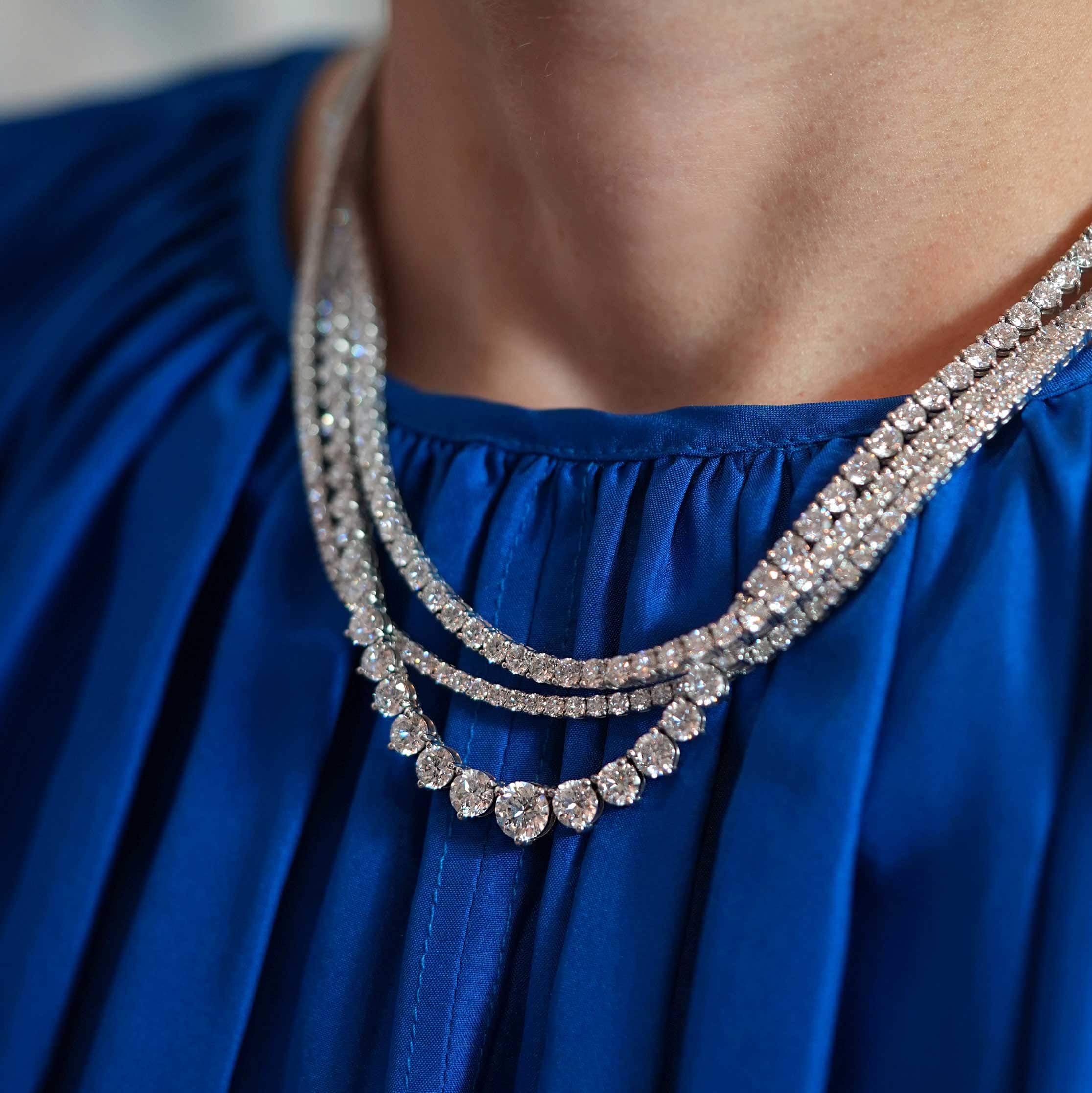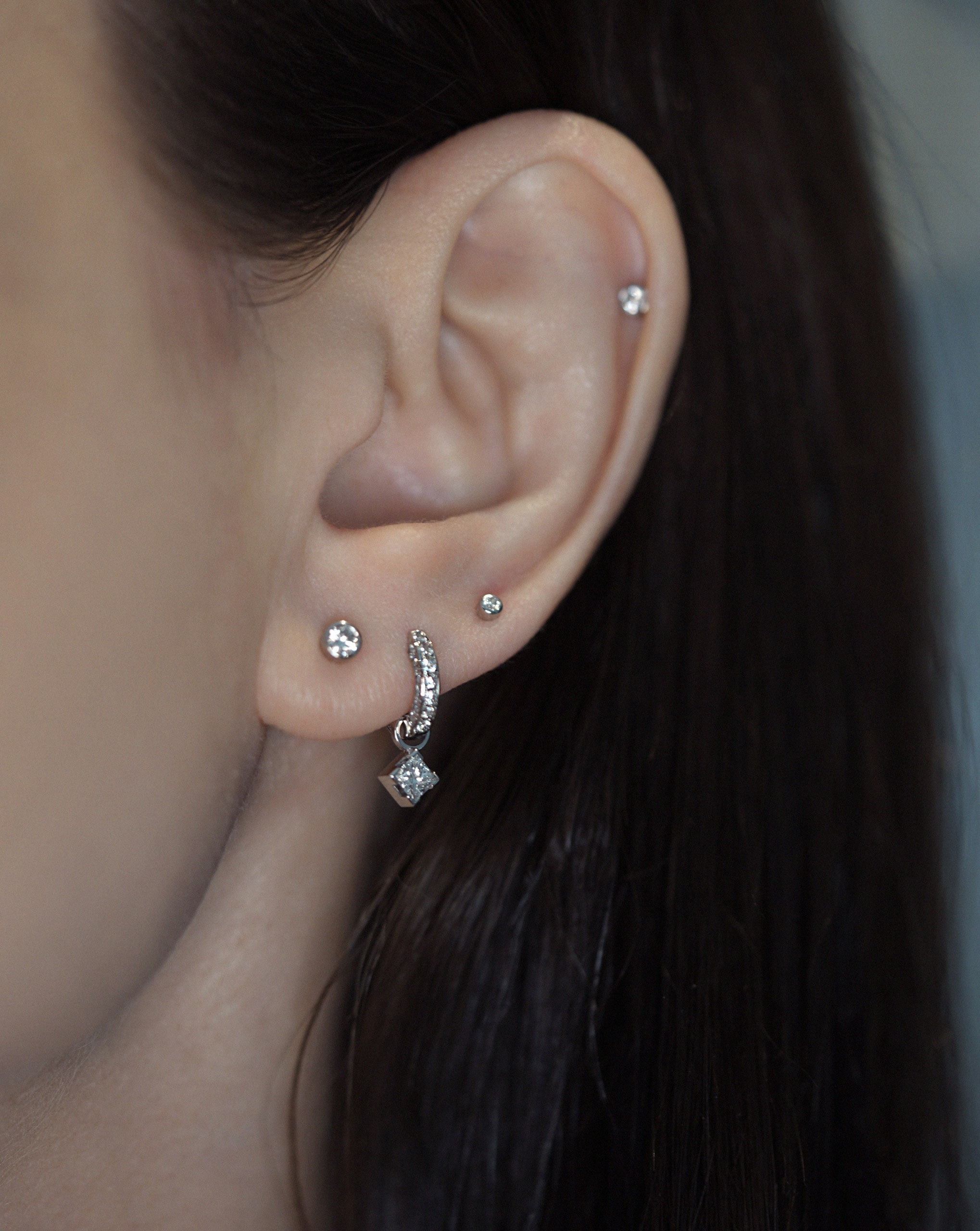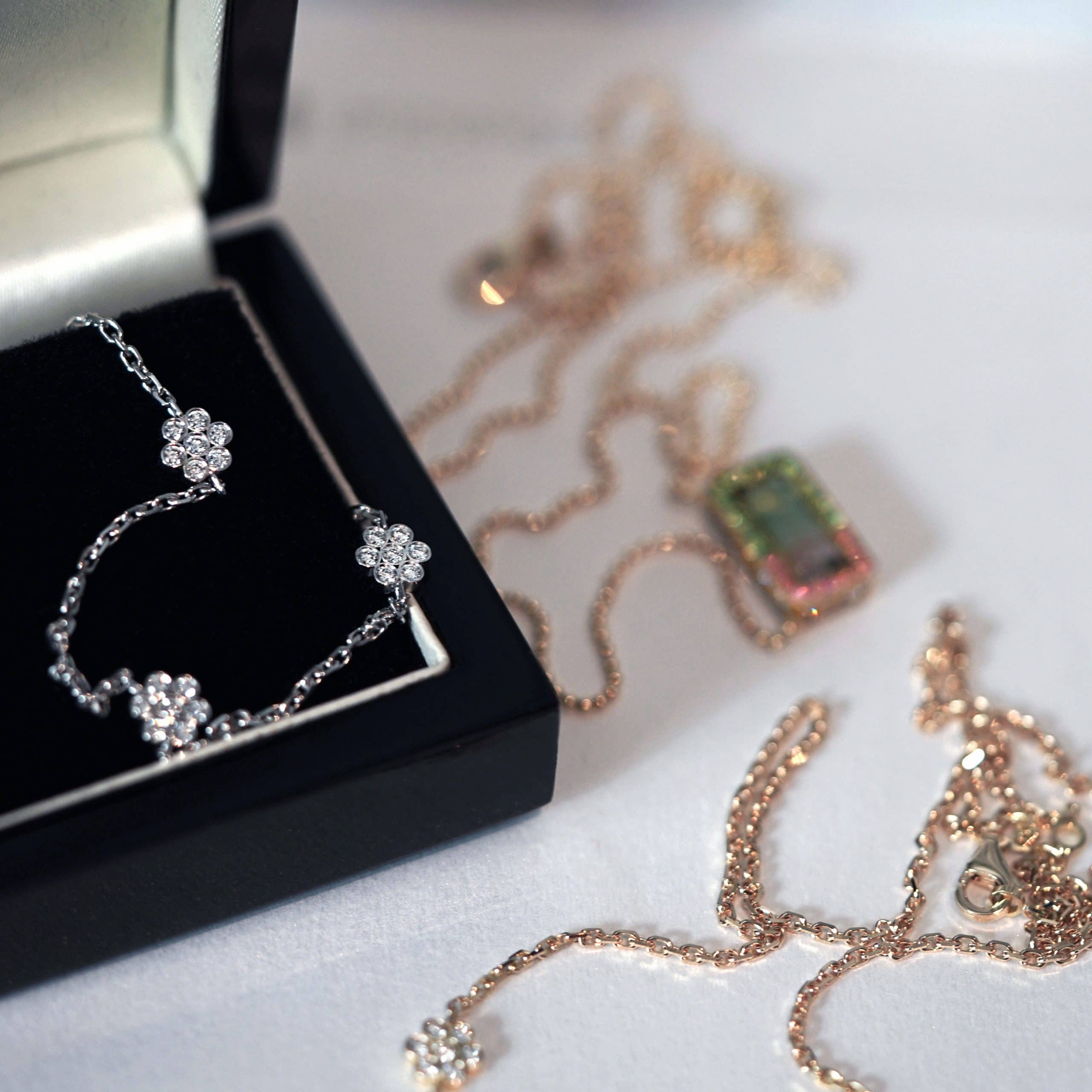
A diamond can be excellent quality and still look surprisingly dull when the jewellery around it is dirty. Hand cream, sunscreen, soap, skin oils and everyday residue collect particularly easily underneath a stone — exactly where light needs to enter. Before assuming your diamond has somehow changed, look at the jewellery itself. At Lena Cohen Jewellery, we see cleaning as part of owning fine jewellery: gentle maintenance at home, sensible limits, and knowing when a ring needs inspection rather than another cleaning experiment.
What is the safest way to clean a diamond ring at home?
For a straightforward diamond ring in sound condition, warm water, a small amount of mild washing-up liquid and a very soft clean brush are usually enough. Concentrate gently on the underside of the diamond and around the setting, where grease accumulates. Rinse carefully in a bowl or with the sink drain securely closed, then dry with a soft lint-free cloth. If a stone moves, the setting looks damaged, or you do not know whether a gemstone can safely be soaked or brushed, stop and ask a jeweller first.
The problem may be on the diamond, not inside it
This causes far more anxiety than it should. A diamond that looked bright when the ring was new can begin to look hazy, flat or slightly milky after weeks of everyday wear.
Very often the culprit is a thin film of hand cream, soap, skin oil or cosmetic residue. Diamonds attract grease particularly readily, and the underside of the stone is easy to neglect because you rarely see it while wearing the ring.
A dirty pavilion can have a surprisingly large effect on brilliance. Before worrying that the stone itself has deteriorated, give the jewellery an appropriate gentle clean.

The top is usually not the dirtiest part of a ring
Wiping the table of a diamond may make it look temporarily cleaner, but everyday residue often sits beneath the stone and around the gallery, claws or bezel.
Use a very soft clean brush and work gently from several directions rather than scrubbing hard from above. The purpose is to loosen grease and residue, not to polish the metal mechanically.
If the architecture of the setting makes the underside particularly difficult to reach, repeated aggressive brushing is not the answer. That is the point at which a professional clean and setting inspection can make more sense.
1. Check the piece first. If a stone feels loose or a claw looks damaged, do not brush it.
2. Add a small amount of mild washing-up liquid to warm — not boiling — water.
3. For suitable diamond and solid-gold jewellery, allow a short soak to loosen everyday grease.
4. Use a soft clean brush gently around the setting and underside of the stone.
5. Rinse carefully. A separate bowl is safer than holding valuable jewellery over an open drain.
6. Pat dry with a soft lint-free cloth and allow any inaccessible areas to dry fully before storage.
The safest method depends on the stone and its treatment
The biggest mistake in jewellery cleaning is assuming that a method that works beautifully on one diamond ring must be suitable for everything else in the jewellery box.
Pearls, emeralds, opals, turquoise and other gemstones can have very different cleaning requirements. Some stones are porous; some may be treated; some react badly to heat, aggressive chemicals, steam or ultrasonic cleaning.
If you are unsure what a stone can tolerate, start with our
Gemstone Durability Guide
and do not experiment on an expensive piece simply because an online cleaning hack looked convincing.

Pearls are much softer than diamonds and should never be treated as though they are simply another gemstone. Keep them away from ultrasonic and steam cleaners, harsh chemicals, perfume and hairspray.
For routine wear, put pearl jewellery on after cosmetics and fragrance, then wipe the pearls gently with a clean soft cloth afterwards.
“Professional equipment” is not automatically professional treatment
Small ultrasonic cleaners are inexpensive and widely available, which can make them seem like an obvious upgrade from a bowl of warm water.
The problem is that an ultrasonic cleaner does not know what has been put inside it. Vibration can reveal or worsen a loose setting, and many gemstones, treatments and organic materials should not be cleaned ultrasonically at all.
A jeweller using ultrasonic or steam equipment can inspect the setting and identify the material first. That judgement is part of the professional service; the machine alone is not.
For routine home care, gentle methods are usually the better starting point.
Toothpaste is for teeth, not fine jewellery
Fine jewellery does not become cleaner because the cleaning method sounds more powerful. Abrasive powders and toothpaste can scratch metal surfaces. Bleach and aggressive household chemicals can damage jewellery materials and should stay well away from fine pieces.
Likewise, do not start mixing household chemicals because somebody described the combination as a “professional hack”.
The safest routine is usually the least dramatic one.
Most cloudy rings are collecting products you use every day
Hand cream is one of the most persistent offenders because it is applied directly beside the ring. Soap, hair products, sunscreen and cosmetics can create the same gradual film elsewhere on jewellery.

Where practical, remove rings before applying heavy hand cream and allow the product to absorb before putting them back on. Take jewellery off before household cleaning, gardening, swimming and other situations where chemicals, impact or abrasion are likely.
Our
Fine Jewellery Care Guide
covers everyday wear, storage, exercise, travel and damage prevention in more detail.
Summer creates its own care problems. Sunscreen coats jewellery particularly easily, while pools and sea water bring chemical exposure and a much greater risk of losing a piece. Our
Summer Fine Jewellery Guide
covers what to wear, what to pack and what is better left safely at home.
A bright ring can still need a jeweller
Cleaning restores the surface appearance of jewellery. It does not rebuild a worn claw, tighten a loose stone, thicken a worn ring shank or repair a damaged clasp.
If a stone clicks or moves, a claw appears noticeably thinner, a chain link has opened, a clasp has become unreliable or a ring has changed shape, stop wearing the piece until it has been checked.
This distinction matters because an immaculate-looking ring is not necessarily a structurally sound ring.
Maintenance begins at the design stage
Two rings made from equally good materials can behave very differently in daily life.
A very high setting may catch more readily. An intricate gallery can trap more residue. Exposed stone corners need different protection from a smooth bezel. Very fine pavé introduces more individual settings that need sensible care than one low-set diamond.

None of those constructions is automatically wrong. The point is that the ring should suit the person who will wear it.
This is why our
Everyday Diamond Rings
use deliberately wearable proportions and low-profile settings across the collection: the jewellery is designed around regular life rather than being saved for a special occasion.
The
Trillion Diamond Slim Ring
is a useful example. The natural trillion-cut diamond has three vulnerable points, so the low smooth bezel surrounds the outline and helps protect those corners while keeping the setting close to the hand.
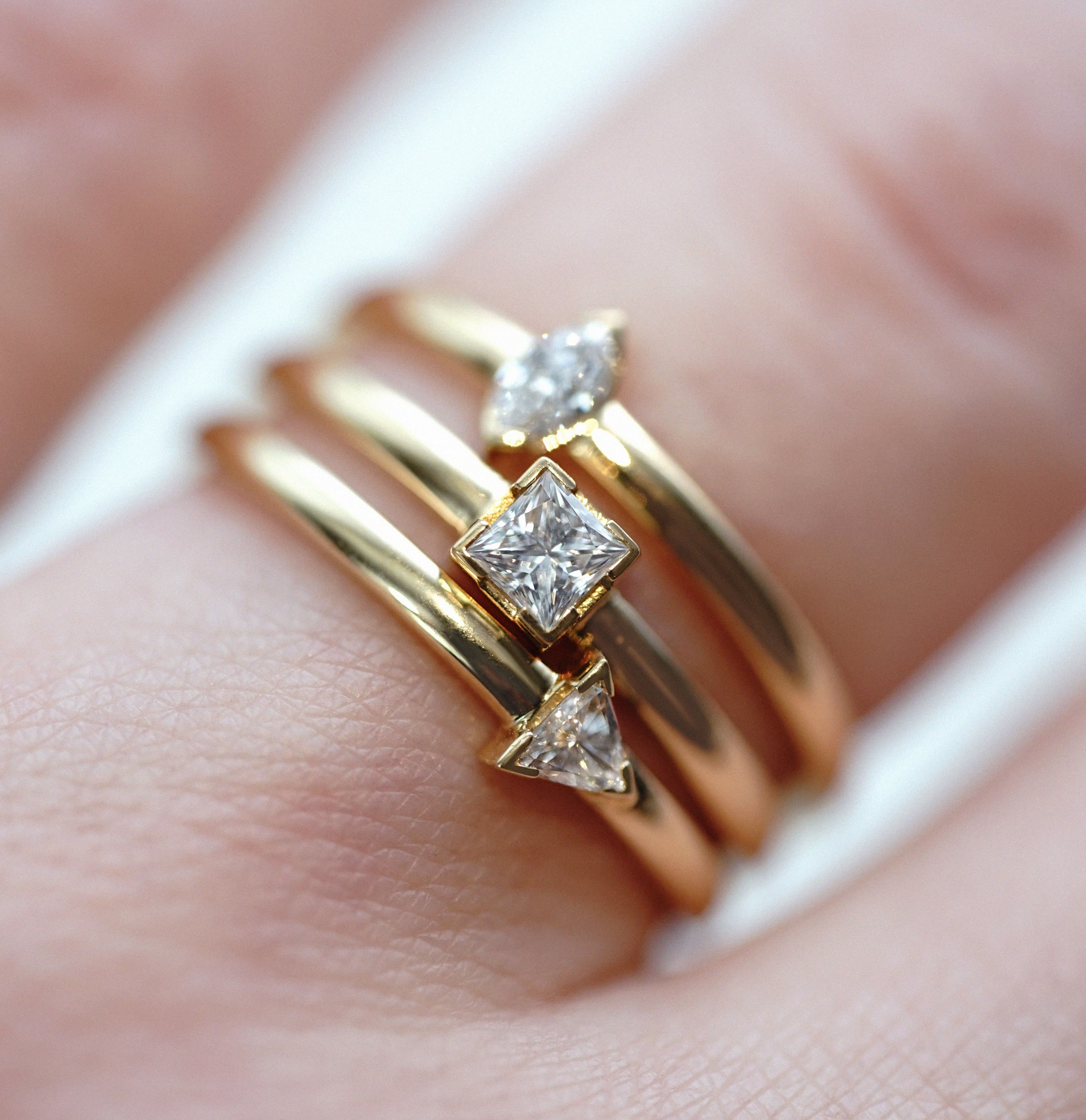
It is still fine jewellery and still needs care, but the construction has been considered for the way the ring will actually be worn.
The prettiest setting in a photograph may not be the best setting for you
When clients discuss a custom ring, we want to know more than the diamond shape. Do you type all day? Wear gloves? Work with your hands? Travel frequently? Want to keep the ring on most of the time? Prefer something low and smooth, or are you happy with a more elevated setting in exchange for a particular look?
Those answers influence setting height, stone protection, band proportions and how much maintenance the finished ring is likely to need.
If you are thinking about an engagement ring, our guide to
what to send a jeweller before designing an engagement ring
explains exactly what information is useful before the diamond or setting has even been chosen.

For another perspective on the same decisions, Lena Cohen recently wrote for
Absolutely Magazines about what to consider before choosing an engagement ring,
including setting height, the side profile of the ring, future wedding-band fit, maintenance, resizing and why the lifestyle of the person who will actually wear the ring belongs in the design conversation from the beginning.
A custom ring should be designed for the years after the proposal photograph
At Lena Cohen Jewellery, bespoke rings are developed around the client, the natural diamond or gemstone and the way the finished piece will actually be worn. That can include the centre-stone shape and proportion, setting height, gold or platinum, band width, profile, stone protection and the practical details that decide how the ring behaves on the hand.

A client who wants a low everyday ring needs a different conversation from someone who wants an elevated solitaire with maximum visual presence. Neither brief is inherently better. The value of bespoke is being able to make that decision deliberately.
Fully bespoke Lena Cohen commissions currently begin from £3,000, with the final quotation depending on the diamond or gemstone, metal, construction and level of custom development.
If you are considering commissioning a ring remotely, our recent guide for
English Wedding explains what to check before paying for an engagement ring online:
who is actually making the ring, what should be confirmed in writing before a deposit, how natural-diamond documentation differs from UK hallmarking, what you should approve before production, resizing considerations and what happens if the specification changes.
You do not always need to start from a blank sheet
If you already like the architecture of an existing design, made to order may be more appropriate than fully bespoke. The centre diamond, metal, proportions or selected details can then be discussed within an established design language.

Explore
Lena Cohen natural diamond engagement rings
made to order in London in solid 18ct gold or platinum.
Clean according to wear, not an arbitrary calendar
A ring worn daily around hand cream will need attention more often than earrings worn twice a month. A necklace worn directly against sunscreen in summer may accumulate residue faster than the same piece worn over winter clothing.
You do not need to wait until a diamond looks visibly grey. Light, regular cleaning is easier than removing months of compacted residue from a complicated setting.
At the same time, repeatedly cleaning jewellery that still looks dull is a sign to stop and ask why. The issue may be scratches, worn metal, damaged rhodium plating, a loose setting or something that home cleaning cannot correct.
Cleaning a ring and then throwing it against five other pieces defeats the exercise
Diamonds are extremely hard and can scratch other jewellery. Polished gold surfaces also pick up fine marks when pieces repeatedly rub together.
Store fine jewellery separately or in divided compartments, keep chains fastened to reduce tangling and avoid allowing diamonds to rub directly against softer gemstones or pearls.
If you are building a larger jewellery wardrobe, our
guide to building a fine jewellery collection
covers materials, storage, buying priorities and choosing pieces that remain useful over time.
Aftercare begins with knowing what you actually bought
Cleaning advice is only useful when the material information is clear. You need to know whether the gold is solid or plated, what the gemstone actually is, whether it has been treated and what construction you are dealing with.

A jeweller-led business should be able to explain those facts and help with practical questions after the sale rather than leaving the client to guess from generic internet advice.
Our guide to
independent fine jewellery in the UK
explains why clear materials, real production information, servicing and direct aftercare are part of the value of buying from an independent jeweller.
Jewellery is meant to be worn — and supported afterwards
Lena Cohen Jewellery is an independent, family-run London fine jewellery business working in solid 18ct gold and platinum with natural diamonds, selected natural gemstones and pearls.
We create finished pieces, existing designs made to order and fully bespoke jewellery. The same small team handles questions about materials, fit, design, adjustments and aftercare rather than separating the sale from the jewellery knowledge behind it.
The aim is not jewellery that remains perfect because it never leaves the box. It is jewellery designed to be worn properly, maintained sensibly and kept.
The questions people usually ask after a diamond stops sparkling
Why has my diamond suddenly become cloudy?
Everyday grease, hand cream, soap and cosmetic residue can create a film on the diamond, particularly underneath it, reducing the amount of light returning through the stone. Try an appropriate gentle clean before assuming the diamond itself has changed.
Can I clean a diamond ring with washing-up liquid?
For a sound diamond ring without delicate or unsuitable additional gemstones, warm water with a small amount of mild washing-up liquid and a soft clean brush is a straightforward home-cleaning method.
Can I use toothpaste to clean a diamond ring?
We would not recommend it. Toothpaste can contain abrasives that may scratch precious-metal surfaces. Mild soap and a soft brush are much more appropriate for routine cleaning.
Should I buy an ultrasonic jewellery cleaner?
Not as a universal cleaning solution. Ultrasonic cleaning is unsuitable for many gemstones and treatments, and vibration can be a problem where a setting is already compromised. If you do not know whether the piece is suitable, have it assessed professionally rather than experimenting.
How do I clean behind the diamond?
After appropriate soaking, use a very soft clean brush gently through the openings in the setting rather than only brushing the top of the stone. If the gallery is difficult to access, a professional clean may be more effective than repeatedly forcing a brush into the setting.
How should I clean pearls?
Pearls need gentler care. Keep them away from ultrasonic and steam cleaners, perfume and aggressive chemicals. Put them on after cosmetics and wipe them gently with a soft clean cloth after wear.
When should I stop cleaning and take the ring to a jeweller?
If a stone moves, a claw appears worn or damaged, the ring has changed shape, a setting catches unexpectedly or repeated appropriate cleaning does not solve the problem, the piece should be inspected rather than cleaned more aggressively.
Can Lena Cohen make a bespoke engagement ring designed for everyday wear?
Yes. A bespoke ring can be developed around the natural diamond or gemstone, desired setting height, metal, band proportions, lifestyle and practical requirements. Fully bespoke Lena Cohen commissions currently begin from £3,000.
Good jewellery should survive real life — with sensible care
Wear the ring. Enjoy the diamonds. Put on the hand cream. Live normally. Fine jewellery does not need to be treated like a museum object.
But give the jewellery the few minutes of maintenance it needs, recognise when a setting needs professional attention and, when you commission a new piece, tell the jeweller how you actually intend to wear it.
Lena Cohen Jewellery creates natural-diamond rings and bespoke fine jewellery in solid 18ct gold and platinum through our London workshop, with design, fit, practical wear and aftercare considered as part of the same object.